

Your anger is a gift.
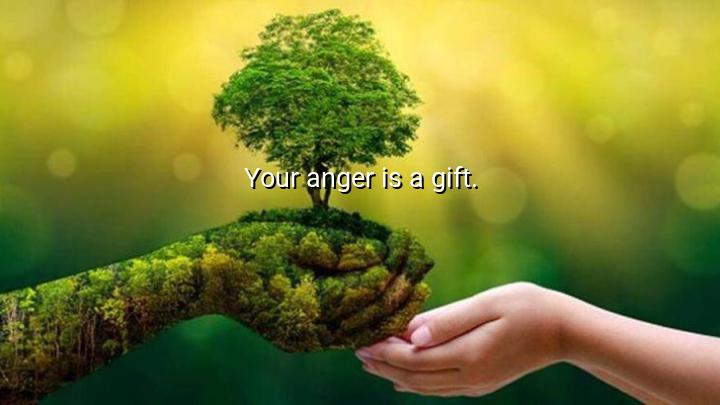




In this quote, Zack de la Rocha reframes anger as a gift, suggesting that it can be a powerful and constructive force if used effectively. Instead of seeing anger as something negative or destructive, de la Rocha encourages people to view it as a tool for change and empowerment. By recognizing anger as a response to injustice or oppression, it can fuel action, inspire activism, and motivate individuals to fight for what they believe in.
The idea that anger is a gift aligns with de la Rocha's work as the lead vocalist of Rage Against the Machine, a band known for its politically charged music and advocacy for social change. In his lyrics, de la Rocha often channels anger to highlight social issues and injustices, using it as a source of motivation rather than letting it turn into bitterness or despair. His message is that anger, when directed toward meaningful causes, can drive individuals to challenge systems of power and work toward positive transformation.
The origin of this perspective likely comes from de la Rocha's own experiences and activism. Growing up in a time of political unrest, he was exposed to the struggles of marginalized communities and the need for collective action. His quote emphasizes the positive potential of anger, encouraging people to harness it for progress rather than letting it consume them or lead to harmful behavior.
Ultimately, de la Rocha’s quote serves as a reminder that anger doesn’t have to be something to fear or suppress. When channeled properly, it can be a gift that sparks change, creates solidarity, and empowers individuals to confront the challenges they face.

HNHuong Nguyen
The idea that anger is a gift resonates with many philosophical and psychological traditions that see emotion as information. How can we cultivate awareness to understand what our anger is telling us? Also, how does this perspective influence how we respond to others’ anger? It suggests a need for empathy and listening rather than immediate judgment.
NNhyyyyyyy
This statement prompts me to reflect on the emotional intelligence required to harness anger positively. What skills or practices can help individuals transform anger into constructive outcomes? Does this view align with therapeutic approaches that encourage exploring anger rather than suppressing it? It’s a reminder that emotions can be tools rather than obstacles.
PTPhuong Thao
Reading this quote, I think about how anger can highlight injustices and push people to stand up for themselves or others. Could viewing anger as a gift help reduce stigma around this emotion? How might this change impact personal growth or social activism? It’s an empowering way to reclaim an often misunderstood feeling.
UGUser Google
I find this idea intriguing but also a bit risky. Calling anger a gift might encourage people to embrace it without considering its potential for damage. How do we balance recognizing anger’s power with the need to manage it responsibly? What role does context play—are there situations where anger is essential, and others where it’s harmful?
TTPham thi thanh thao
This quote flips the usual negative view of anger on its head, calling it a gift instead. It makes me wonder, how can anger be positive or productive? Is it about channeling that energy into action or change? Also, how do we differentiate between healthy anger that motivates versus destructive anger that harms? This perspective challenges me to rethink my relationship with my own anger.