

You reclaim your power by loving what you were once taught to hate.
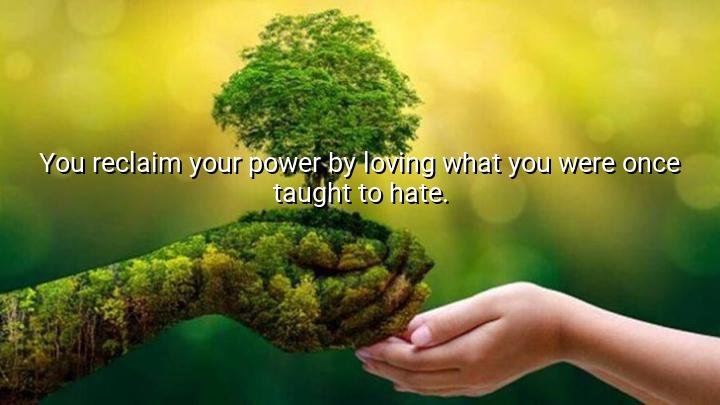




In this quote, Bryant H. McGill suggests that true empowerment comes from overcoming negative beliefs or prejudices and learning to love what was once hated. The idea is that many of us are conditioned by society, culture, or past experiences to dislike certain things or people, but by shifting this mindset, we can reclaim our personal power. Loving what was once hated challenges those negative teachings and frees us from their influence.
McGill’s message is rooted in the concept of growth and transformation. When we resist hatred and instead embrace understanding and compassion, we break free from the limitations imposed by external influences. This shift in perspective allows us to grow stronger, as we no longer carry the burden of resentment or fear. By choosing to love, we reclaim control over our emotional responses and how we interact with the world.
The origin of this quote speaks to McGill's focus on self-awareness and healing. He advocates for confronting past wounds and misconceptions in order to foster a more empowered and balanced life. By recognizing and challenging our ingrained biases, we can transform ourselves and our outlook, turning what was once a source of pain into an opportunity for growth.
Ultimately, McGill encourages us to rethink what we’ve been taught to hate and, by embracing love and compassion, unlock a greater sense of freedom. This act of love is not just about others—it’s about reclaiming our peace and strength by redefining our emotional responses.

TNTO THAI NHAT
I appreciate how this quote reframes love as an active, empowering choice rather than just a feeling. How can we practice loving what we were taught to hate in everyday life? Does this involve education, exposure, or challenging our assumptions? It also makes me think about the ongoing work of dismantling prejudice and the emotional resilience needed to do so.
NADuong Ngoc Anh
This quote feels like a call to courage because loving what we were taught to hate requires confronting fear and societal conditioning. How do we support people on this journey of emotional reclamation? Is this process more about individual work or collective change? It opens a dialogue about the transformative power of love as an act of resistance and self-empowerment.
NNtran ngoc nhi
Reading this, I’m curious about examples where this kind of emotional reversal has happened—whether in personal growth, social movements, or reconciliation efforts. How does loving what was once hated affect identity and relationships? Could it be uncomfortable or liberating? This quote encourages a radical re-examination of our biases and the healing potential of love.
GDGold D.dragon
This statement makes me think about the role of education and upbringing in shaping our emotions. If we can reclaim power by loving what we once hated, how much control do we really have over our feelings? What role does self-awareness play in this transformation? It’s fascinating to consider how changing our emotional responses can break cycles of hate and create new paths forward.
UGUser Google
I find this quote inspiring because it suggests that personal empowerment comes from challenging what we were taught negatively. How difficult is it to undo such deep-seated hatred, and what steps help in that process? Could this idea apply not only to individuals but also to communities healing from historical divisions? It raises important questions about forgiveness, empathy, and the power of conscious choice.