

When angry count to ten before you speak. If very angry, count to one hundred.
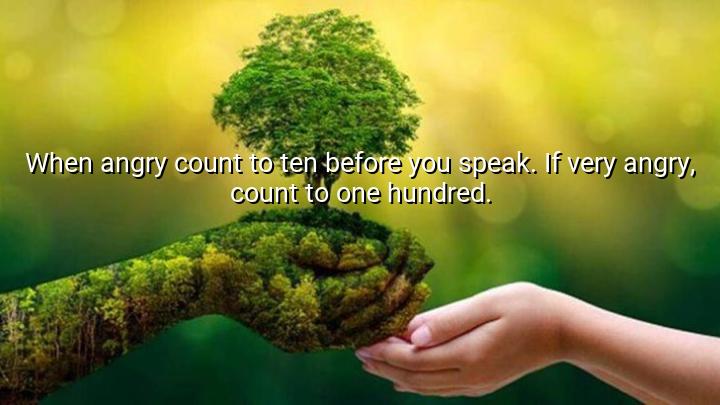




The quote by Thomas Jefferson — "When angry, count to ten before you speak. If very angry, count to one hundred." — emphasizes the importance of self-control and pause when dealing with strong emotions, particularly anger. Jefferson suggests that when we feel angry, taking a moment to count allows us to cool down before reacting. By doing so, we give ourselves a chance to think rationally, preventing impulsive words or actions that we may regret later.
Jefferson's advice is rooted in the principle of emotional regulation. He recognizes that anger can cloud our judgment and cause us to say things in the heat of the moment that we don't truly mean. By counting to ten, we allow time for our emotions to settle, making it easier to communicate calmly and effectively. If the anger is more intense, counting to a higher number, like one hundred, further extends the pause, giving us even more time to regain composure.
The origin of this quote reflects Jefferson’s understanding of human nature and the importance of maintaining a level of reason in difficult situations. As a statesman and thinker, Jefferson valued reflection over rashness, believing that thoughtful decisions lead to better outcomes. His advice suggests that a moment of pause can be the difference between a constructive conversation and a destructive argument.
Ultimately, Jefferson’s quote is a timeless reminder of the value of patience and mindfulness in moments of anger. Rather than reacting impulsively, counting to ten (or one hundred) provides an opportunity to gain clarity, maintain control, and respond with wisdom.

TNNguyen Hoang Tuyet Nhu
This reminds me of how sometimes a brief pause can change the entire outcome of an argument. But how often do people actually remember to count to ten or one hundred when they’re furious? Could developing a habit around this take time, or might it feel artificial to some? I’m curious about practical tips to make this pause second nature, especially for people prone to impulsive reactions.
LLala
I think this advice encourages patience and thoughtfulness, but I’m curious about its applicability across different cultures. In some societies, quick emotional expression might be valued more than restraint. How might this counting technique be received in such contexts? Also, does the advice change based on the nature of the conflict—personal vs. professional? It raises interesting questions about emotional regulation in diverse settings.
NMCao Tran Ngoc My
This quote seems to promote emotional self-control, which is essential, but I wonder if there’s a risk of suppressing anger rather than expressing it healthily. How can we balance pausing to avoid rash words with the need to communicate our feelings honestly? Does counting help create space for reflection, or could it sometimes delay important conversations? I’d love to explore strategies that encourage both restraint and authenticity.
PHVo Thi Phuong Hieu
I appreciate the simplicity of this method, yet I question how effective it is in real life. When emotions run high, does counting really slow down the flood of feelings? What happens if someone’s anger is linked to deep pain or trauma—can this technique still help? I’m interested in hearing if anyone has combined this with other mindfulness practices to better manage anger in difficult situations.
CCDuong Cao Cuong
This advice feels timeless and practical, especially in heated moments. But I wonder if simply counting is enough to calm intense anger? Are there additional techniques that might complement this, like deep breathing or stepping away? Also, how do different people respond to this approach—does it work better for some personalities? It makes me curious about the science behind why pausing before speaking helps prevent regrettable words.