

When anger rises, think of the consequences.
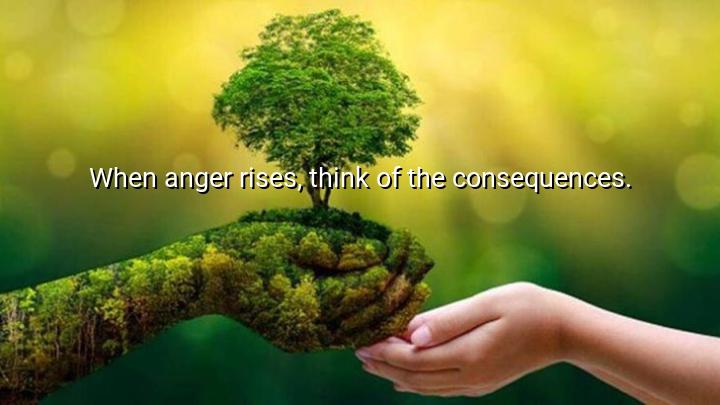




The quote by Confucius — "When anger rises, think of the consequences." — advises that before reacting impulsively out of anger, we should pause and consider the potential consequences of our actions. Confucius emphasizes the importance of self-control and reflection in moments of frustration or rage. Instead of letting anger dictate our responses, we should take a moment to think about how our actions might affect ourselves and others in the long term.
This quote reflects Confucius' teachings on virtue and wisdom, urging us to act with reason rather than being driven by impulsive emotions. Anger can cloud our judgment and lead to decisions we may later regret, so by thinking about the consequences, we gain clarity and the opportunity to make better choices. This is especially important in relationships, where hasty words or actions driven by anger can cause irreparable damage.
Confucius believed that true wisdom comes from understanding the bigger picture and making decisions based on a calm and rational mind. His advice encourages a mindful approach to emotions, where we weigh our actions carefully instead of reacting immediately. By considering the consequences, we avoid making decisions that we might regret and create a more thoughtful, harmonious way of interacting with the world around us.
Ultimately, Confucius’ quote reminds us that while anger is a natural emotion, it’s the ability to control it and think through the consequences that defines our wisdom and character. By reflecting on the outcomes before reacting, we can maintain our integrity and avoid actions that could lead to unnecessary conflict or harm.

PNPhung Ngoc
The quote prompts me to think about the balance between feeling anger authentically and restraining its expression for the sake of consequences. How can one honor their feelings while preventing negative outcomes? Does this teaching suggest that anger should be suppressed or channeled constructively? I’m curious about the psychological tools that help navigate this balance effectively.
TNNguyen Thi Thanh Nha
This statement makes me reflect on the potential long-term impact of angry actions. Sometimes a moment of uncontrolled anger can damage relationships irreparably. How can we teach children and adults alike to develop the habit of pausing and reflecting before reacting? Is this a skill best learned through education, role models, or personal experience?
HThue tran
Confucius highlights the importance of responsibility in emotional expression. I wonder how this idea translates to modern conflict resolution—does anticipating consequences help people communicate more constructively? Could this mindset reduce workplace or family disputes? It seems like a practical reminder that emotions, while natural, require thoughtful management to avoid harm.
VPLoan Vu Phuong
Thinking about consequences when angry seems like sound advice, yet it’s often easier said than done. How can we cultivate this kind of awareness, especially for people prone to impulsivity? Does Confucius’s teaching imply that emotional control is a form of wisdom? I’d be interested in exploring how different philosophical traditions approach managing anger and impulse control.
YNLe Thi Yen Nhi
This quote encourages mindfulness and foresight in emotional reactions, which I find very valuable. But I wonder, in the heat of the moment, how realistic is it to think clearly about consequences? Are there strategies or habits that can train people to slow down their response to anger? It also raises the question of whether some anger is too sudden to be managed this way.