

Whatever is begun in anger ends in shame.
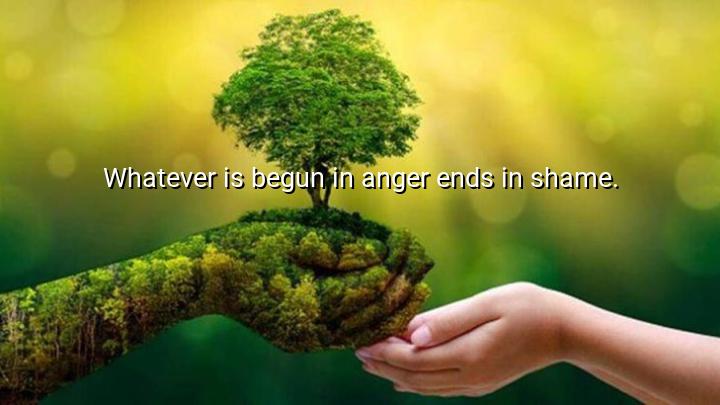




The quote by Benjamin Franklin — "Whatever is begun in anger ends in shame." — suggests that actions driven by anger often lead to negative consequences and regret. Franklin implies that when we make decisions or take actions while angry, we are more likely to act impulsively, without considering the long-term effects. These actions, often rash and unthoughtful, tend to result in shame or embarrassment once the anger subsides and we reflect on the damage done.
Franklin’s statement highlights the danger of acting out of anger, as it clouds our judgment and leads to choices that we may not make under calmer circumstances. In the heat of anger, people may say things they don’t mean or do things that hurt others, causing them to feel shame later on. This idea reflects the importance of emotional self-control and the need to pause before reacting in order to avoid regretful actions.
As one of the Founding Fathers and a philosopher, Franklin often wrote about the importance of reason and virtue. He believed that anger was a destructive emotion that could undermine one’s character and dignity. His warning about anger leading to shame serves as a reminder of how impulsive reactions can tarnish relationships, reputations, and personal integrity.
Ultimately, Franklin’s quote emphasizes the need to manage anger before it leads to regrettable outcomes. By taking a step back and allowing emotions to settle, we can avoid making decisions in the heat of the moment that may result in shame or harm.

VDNguyen Van Duong
This quote makes me think about how anger can overshadow our better judgment and lead to social or relational damage. How do we teach young people to recognize the consequences of anger-driven behavior? Are there effective educational or cultural approaches to instill this awareness early on? It highlights the importance of emotional regulation in personal and community harmony.
DTPham Dinh Thien
The quote invites reflection on personal responsibility for our emotional reactions. How can we cultivate accountability for our actions, especially when influenced by anger? Is shame always a negative feeling, or can it be a motivator for change? I’d be interested in exploring how this perspective fits within restorative justice or conflict resolution frameworks.
GJgg joi
Reading this, I reflect on the idea that anger clouds judgment and leads to outcomes we later regret. How does this align with modern psychological understanding of impulse control? Can mindfulness or therapy help individuals recognize and manage anger before it results in shame? It seems like a timeless piece of wisdom with practical applications.
LTLoan Tran
Franklin’s statement highlights the long-term impact of actions taken in the heat of the moment. I’m curious about how people can learn from these experiences to avoid repeating mistakes. Does acknowledging shame help in emotional growth and forgiveness? It also makes me think about cultural differences in how anger and shame are perceived and handled.
TT35_tran Thi tin
This quote feels like a cautionary tale about the consequences of letting anger drive our actions. But are there exceptions where anger can be a catalyst for positive change without leading to shame? How do we differentiate between destructive anger and constructive passion? It raises questions about emotional intelligence and the balance between feeling and thinking.