

What comes out when life squeezes you? When someone hurts or offends you? If anger, pain and fear come out of you, it's because that's what's inside.
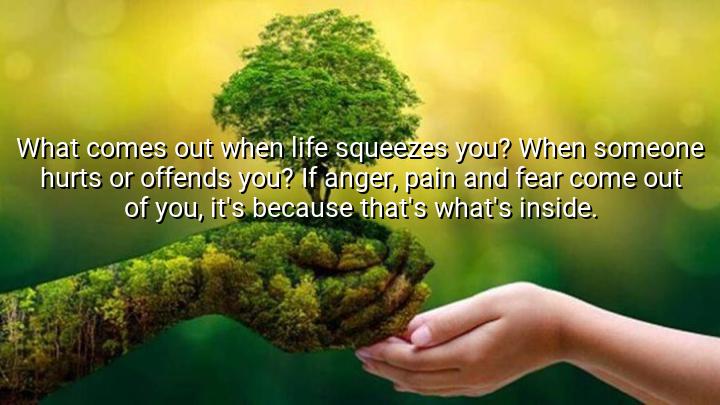




In this quote, Wayne Dyer emphasizes that our emotional reactions to external events, especially when we are hurt or offended, reveal what is already present inside us. He asks the question, "What comes out when life squeezes you?" meaning how do we respond when we face challenges or emotional pain. If emotions like anger, pain, and fear emerge in those moments, it indicates that these feelings were already stored within, waiting to be triggered by external circumstances.
Dyer's statement suggests that emotional reactions are not just spontaneous or arbitrary but are a reflection of our inner state. When we are faced with adversity, the way we react—whether with anger, fear, or pain—is a result of what we have internalized over time. It speaks to the idea that emotional growth and healing require us to address the unresolved emotions within ourselves, as they shape our responses to the world around us.
The origin of this quote lies in Dyer's teachings on personal development, spirituality, and emotional well-being. As a self-help author and motivational speaker, Dyer often discussed the importance of self-awareness and the role of inner peace in navigating life's difficulties. His work encourages individuals to examine their emotions and take responsibility for how they react to others and to life's challenges.
Ultimately, Dyer's quote serves as a reminder that our emotional reactions are often a reflection of our inner world. By becoming aware of what rises up inside us in difficult moments, we can begin to address and transform the anger, pain, and fear that may be holding us back from achieving emotional balance and peace.

HTHo Thi Huyen Trang
This statement leads me to think about how societal and cultural conditioning might influence what’s ‘inside’ us. Are certain emotions like anger or fear more prevalent due to upbringing or environment? How much control do we truly have over what emotions reside within, and how can we reshape that internal landscape for healthier responses?
ZZian
The quote suggests that our emotional outbursts are mirrors of our inner state. But is it possible to feel anger or fear that isn’t deeply ingrained but rather a temporary reaction? How do mindfulness and emotional intelligence help distinguish between fleeting emotions and persistent inner pain? Exploring this could enhance emotional regulation strategies.
UGUser Google
Reading this, I’m curious about how this applies to forgiveness. If anger and pain reflect what’s inside, does forgiving others require first healing ourselves? How can we break cycles of negative emotions that seem to perpetuate from within? This quote points to the deep connection between self-understanding and relational harmony.
LHlethi hang
This idea emphasizes the importance of inner work to manage our responses. How can we cultivate emotional resilience so that when life ‘squeezes’ us, less anger and fear come out? Are there practices or therapies that help us identify and heal these inner emotions? It seems like a call to focus on personal growth as a way to transform our interactions.
LNNhu Ngoc Lan Nguyen
I find this perspective insightful but a bit unsettling. If painful emotions come from within, does that mean people are responsible for their own hurt reactions? How does this view account for external factors like trauma or manipulation? It invites a complex discussion about the interplay between internal emotional baggage and external circumstances.