

We're comfortable with women in certain roles but not comfortable with women expressing anger or fully accepting their power. The most daring question a woman can ask is, 'What do I want?'
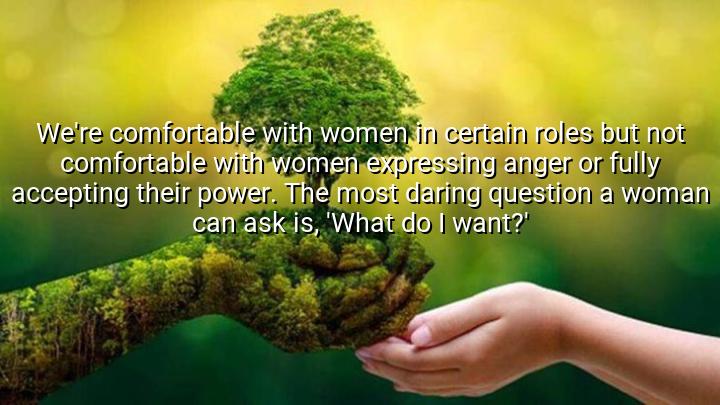




Libba Bray's quote, "We're comfortable with women in certain roles but not comfortable with women expressing anger or fully accepting their power," addresses the societal expectations placed on women. Bray highlights the limitations imposed on women by traditional gender roles, where they are expected to behave within certain boundaries but are often discouraged from expressing anger or owning their power. This reflects a societal discomfort with women stepping outside of prescribed roles and asserting their full agency.
The origin of this idea is rooted in the historical and cultural suppression of women’s voices and emotions. Throughout much of history, women have been taught to be docile, nurturing, and accommodating, with little space for the expression of emotions deemed as "negative," such as anger. Bray points out that this lack of acceptance for women’s anger and power is deeply ingrained in societal structures, which often marginalize or undermine women who do not conform to these expectations.
Bray further challenges this norm with her statement, "The most daring question a woman can ask is, 'What do I want?'" This question emphasizes the power of self-discovery and personal desire. Asking this question is a radical act, as it forces women to prioritize their own needs and desires over external expectations. It calls for women to embrace their agency and to reject the societal constraints that dictate what they are allowed to feel and aspire to.
The quote serves as a call to action, urging women to reclaim their power and take ownership of their desires. By recognizing the anger and power within themselves, women can challenge the traditional narratives that confine them to certain roles and instead demand the freedom to define their own paths.

VVii
This quote challenges the stereotype that women should be passive or agreeable. Expressing anger and owning power can be seen as threatening to established systems. How can allies support women in overcoming these barriers? Also, what role do men play in either reinforcing or dismantling discomfort around women’s assertiveness? It highlights the need for systemic change to embrace diverse expressions of womanhood.
ALHien Anh Le
The idea that a woman’s simple question about her own desires is seen as daring reveals much about societal control. How do you think this affects women’s mental health and self-worth? Does suppressing anger and power lead to frustration or burnout? I’d also be interested in hearing stories of women who have courageously embraced this question and the impact it had on their lives.
DNDuy Nguyen
Reading this quote, I’m curious about how different cultures and generations view women’s anger and power. Are younger generations more accepting of women asking 'What do I want?' and embracing their full selves? What barriers still exist, and how do women navigate the risks associated with breaking these norms? This invites a conversation about progress and ongoing resistance.
NMNguyen Minh
This perspective reveals a deep-rooted bias against women’s emotional and personal agency. Why do you think society is more comfortable with women in nurturing roles but uncomfortable with them showing anger or ambition? It suggests a double standard that restricts women’s full humanity. How might challenging this discomfort change power dynamics in workplaces, politics, and personal relationships?
TCTu Cam
I’m struck by how this quote frames the assertion of female desire as a revolutionary act. It makes me question how much internalized sexism affects women’s willingness to own their power and express anger. Does society’s discomfort stem from fear of losing control, or from ingrained stereotypes? This also leads me to think about how media and education can play a role in normalizing women’s assertiveness and emotional complexity.