

We cannot go anywhere with anger that we haven't already been.
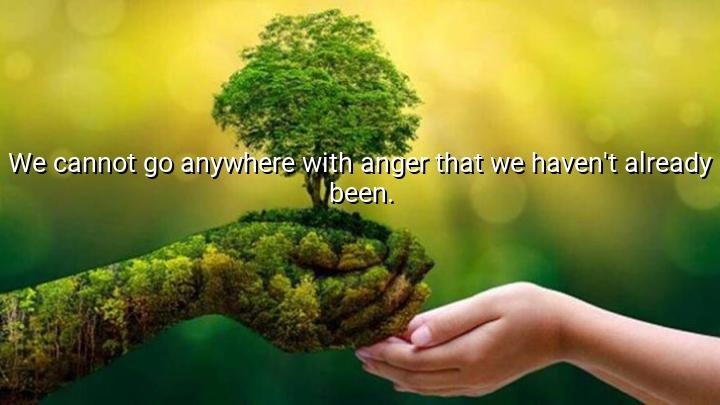




In this quote, Afeni Shakur reflects on the limitations of anger and its inability to lead to true progress or growth. She suggests that anger is a reaction to past experiences, and it is rooted in emotions and situations we've already encountered. Shakur’s message is that anger does not propel us forward; instead, it keeps us stuck in the past, focusing on old wounds or injustices rather than moving toward a better future. By emphasizing that "we've already been" to those emotional places, she warns that unresolved anger only brings us back to where we started, preventing real change.
Shakur’s statement also highlights the importance of self-reflection and emotional growth. Instead of allowing anger to dictate one's path, she advocates for a more thoughtful and purposeful approach to dealing with adversity. The idea is that we need to look beyond anger, which often clouds judgment, and seek solutions or actions that lead to healing and progress. Holding onto anger, according to Shakur, keeps us confined to the negative experiences that anger is often born from.
The origin of this quote stems from Afeni Shakur's life as a political activist and the mother of Tupac Shakur, a prominent figure in music and social justice. Shakur herself was deeply involved in movements for racial and social justice and experienced significant struggles in her life, including involvement with the Black Panther Party. Her experiences with anger and social injustice influenced her belief in overcoming emotional barriers for greater personal and collective progress.
Ultimately, Shakur’s quote serves as a reminder that anger, while a natural emotion, can limit growth if it is not properly managed. It encourages individuals to move past their anger, embracing healing and constructive actions to create a future that is not dictated by past grievances. By not dwelling in anger, we can create new opportunities for change and empowerment.

VNVan Nguyen
This quote prompts reflection on the emotional states we choose to inhabit. Could it be that anger, while powerful, is a kind of emotional cul-de-sac? How do we cultivate emotions or attitudes that lead us to new experiences or breakthroughs? I’d love to explore how mindfulness or emotional intelligence contributes to moving past anger.
BPBich phuong
Afeni Shakur’s statement challenges the common perception of anger as a driving force. Does this mean that relying on anger might limit creativity or solutions? How might adopting compassion or understanding open new paths? I’m curious about how people balance the power of anger with the need for constructive change.
MDThi Thanh Mai Dang
This quote resonates with the concept that lingering in anger can prevent progress. I wonder if this applies more to personal struggles or larger societal conflicts. How can communities break free from cycles of anger that hinder reconciliation or advancement? It would be insightful to discuss practices that help individuals and groups move beyond anger effectively.
KPThang Kim Phuc
The idea that anger doesn’t take us anywhere new makes me think about emotional maturity and growth. Is it possible that anger is a necessary step but not the destination? How do we recognize when it’s time to let go of anger and embrace other emotions like forgiveness or hope? I’d like to understand how people navigate this emotional journey.
TNNguyen le thao nguyen
Afeni Shakur’s words feel like a caution against dwelling in anger. But can anger ever be a catalyst for positive action, or does it inevitably lead us back to familiar places? What are the ways to transform anger into motivation without getting stuck? It raises important questions about the role of anger in personal and social transformation.