

We are not actually in charge of life, yet behave as if we are the masters of our own destiny. The realization of this fact is quite a hard one. The ridiculousness of our pomposity and presumption can only result in anger or humor.
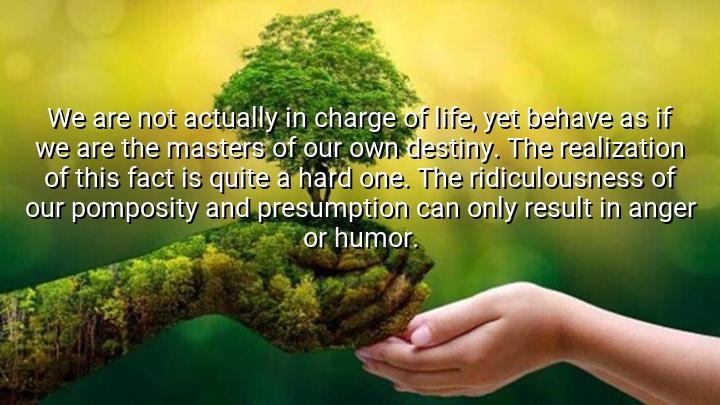




In this quote, Billy Childish reflects on the human tendency to believe that we are in complete control of our own destiny and the direction of our lives. He argues that, despite our belief in our own agency, we are not actually in charge of life itself. This realization—that much of what happens in life is beyond our control—can be difficult and humbling to accept, as it challenges the common notion of mastery over our circumstances.
Childish suggests that the recognition of this lack of control leads to two possible emotional responses: anger or humor. The absurdity of our own pomposity and presumption—believing that we are the masters of our fate when, in fact, much is dictated by forces beyond our control—can provoke feelings of frustration or irony. For some, this understanding may lead to anger, as it forces a confrontation with the limitations of human power. For others, it may inspire humor as a way of coping with the inherent absurdity of life.
The mention of anger and humor underscores how people typically respond to the tension between their desire for control and the recognition of their actual powerlessness. Anger comes from a place of frustration with the realization that much of life’s course is out of our hands, while humor allows us to laugh at the contradiction between our inflated sense of self and the randomness of existence. Childish points out that both reactions are natural ways to deal with the unsettling nature of this truth.
Ultimately, this quote invites reflection on the human condition, highlighting the tension between our desire for autonomy and the acceptance of our vulnerability in the face of life's uncertainties. By acknowledging the limitations of our control over destiny, Childish challenges us to confront the inherent humility in accepting our place in the larger scheme of things.

THThu Huongg
Reading this, I’m reminded of moments when I felt overwhelmed by life’s unpredictability, yet also amused by my own attempts to control everything. Is this oscillation between anger and humor a natural defense mechanism? How do different personalities react to the ‘ridiculousness’ of our pomposity? It makes me wonder if cultivating humor is a healthier way to cope with the limits of control compared to succumbing to anger.
MVLe My Viet
The quote highlights a kind of cosmic irony in human behavior. Our presumptuousness seems both tragic and comedic. How do individuals or societies cope with this contradiction? Are there examples where recognizing our lack of control has led to more humility or better decision-making? Alternatively, does this awareness ever fuel nihilism or resentment? It’s fascinating to think about how this balance shapes our emotional landscape.
LTLe Thuy
This perspective challenges the notion of free will and personal agency. If we’re not really in charge, how does that affect our sense of purpose or motivation? Does it undermine ambition, or can it free us from unrealistic expectations? I also wonder how different philosophies or religions interpret this ‘hard realization.’ Is the resulting anger or humor culturally influenced, or a universal human response?
Pphanhoangan
I appreciate the humor in the idea of our pomposity being ridiculous, but it also strikes a deeper chord. How often do we recognize the limits of our control before frustration sets in? Could embracing the unpredictability of life help reduce stress and anger? Or does it risk fostering complacency? This tension between acceptance and striving for control seems central to human experience. What are your thoughts on balancing these forces?
HHHo Hoang
This quote really makes me think about the illusion of control in our lives. If we’re not truly masters of our destiny, why do we cling so fiercely to that belief? Is it a coping mechanism or simply human arrogance? I’m curious about how people reconcile this realization—does it lead to existential anger, or do most find relief through humor? How does this perspective influence the way we approach decision-making and responsibility?