

We are looking for happiness and running after it in such a way that creates anger, fear and discrimination. So when you attend a retreat, you have a chance to look at the deep roots of this pollution of the collective energy that is unwholesome.
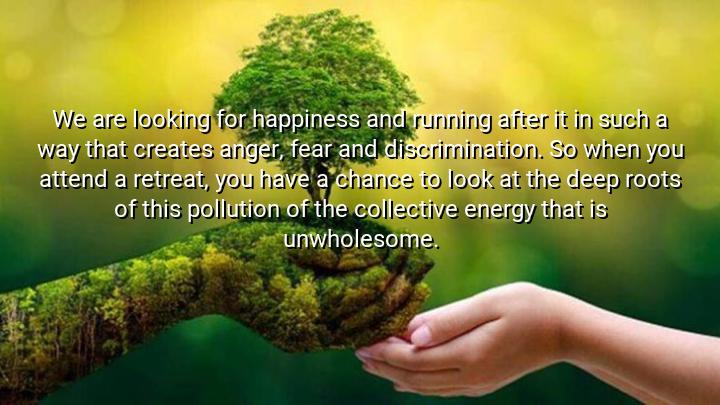




In this quote, Thich Nhat Hanh points out how the pursuit of happiness in modern life can sometimes lead to negative emotions like anger, fear, and discrimination. He suggests that in our relentless chase for happiness, we often ignore the deeper causes of our emotional turmoil and social divisions. The intense striving for external sources of happiness can lead to internal pollution of the mind and collective energy, which in turn contributes to unwholesome attitudes and behaviors that harm both individuals and society.
Thich Nhat Hanh emphasizes the importance of attending a retreat as a way to step back from the constant pursuit of happiness and instead reflect on the deep roots of the unwholesome energy within ourselves. By taking time to meditate and contemplate, we can gain insight into the sources of our negative emotions and how they perpetuate cycles of stress, fear, and conflict. A retreat provides an opportunity for self-reflection and healing, helping to clear the pollution of the mind and restore a more balanced and compassionate perspective.
The origin of this quote comes from Thich Nhat Hanh’s teachings as a Vietnamese Zen master and peace activist. He has long advocated for the practice of mindfulness and meditation as tools for cultivating peace and understanding, both individually and collectively. His work often focuses on how modern society’s obsession with material success and external achievements can lead to spiritual emptiness and emotional distress, urging individuals to look inward for true happiness.
Ultimately, Thich Nhat Hanh’s quote encourages us to rethink our approach to happiness. Instead of relentlessly chasing after it in ways that cause harm or inner turmoil, we should seek a deeper understanding of the root causes of our negative emotions. Through practices like meditation and retreats, we can begin to dissolve the unwholesome energy that clouds our judgment, replacing it with a more compassionate and mindful way of living.

PKngo phu khang
I appreciate the poetic and profound nature of this thought, but I’m also skeptical—can a retreat truly offer long-term transformation, or is it just a temporary relief from the world’s chaos? What happens when we return to our regular lives? How do we maintain that awareness and resist falling back into the same patterns of anxiety and divisiveness that the retreat helped us recognize?
VLVien Le
This quote makes me reflect on how often our quest for happiness is actually rooted in fear—fear of missing out, of failure, of being left behind. Could it be that the way we define happiness in the modern world is inherently flawed? I’d love to hear how different cultures interpret this idea. Are there societies that pursue happiness in a more harmonious, less self-destructive way?
MTGiap Minh Tung
Thich Nhat Hanh’s message feels timely, but I’m left wondering—how do you explain the concept of ‘unwholesome collective energy’ to someone unfamiliar with Buddhist thought? It sounds abstract yet deeply intuitive. Is it like a social atmosphere that makes everyone feel anxious and disconnected? And how do we, as individuals, begin to detox from it without retreating from society entirely?
PLPhuong Linh
Isn’t it paradoxical that the more desperately we seek happiness, the further we seem to get from it? This quote highlights a deep truth that I think many of us avoid confronting. But I also wonder, what does it really mean to ‘look at the deep roots’ of this unrest? Does that involve confronting painful truths about ourselves, our desires, or the systems we participate in every day?
BHBao Han
I really resonate with the idea of 'collective energy' becoming polluted. But I’m curious—how much of this pollution is shaped by social media and constant comparison? Are we amplifying our discontent by constantly measuring ourselves against curated happiness? Could mindfulness and intentional disconnection from these influences be part of what Thich Nhat Hanh is pointing toward when he talks about the importance of retreats?