

They say depression is just anger turned inward. Sometimes I turn it outwards, sometimes I turn it inward, but I know it's about self-worth.
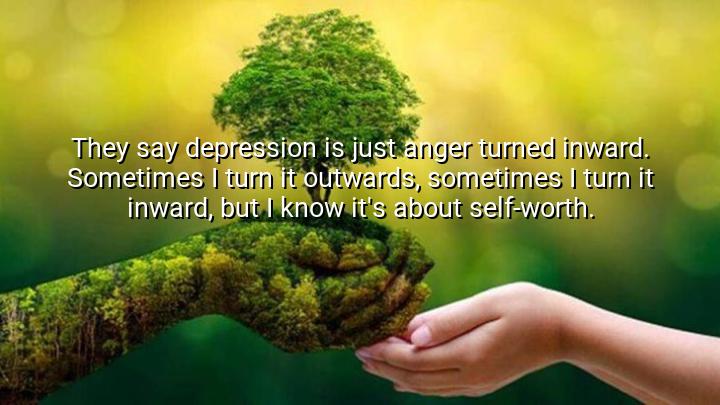




The quote by Vic Mensa highlights the complex relationship between anger and depression, suggesting that depression may stem from unresolved feelings of anger that are either directed inward or outward. By stating that "depression is just anger turned inward," Mensa reflects on how emotional struggles can sometimes be internalized, leading to a negative self-image or low self-worth. This suggests that when a person cannot express their anger or frustration outwardly, it can transform into depression, affecting their mental health.
In his words, self-worth plays a pivotal role in how these emotions manifest. Mensa acknowledges that he experiences both outward and inward forms of anger, showing an awareness of his own mental and emotional battles. The quote reveals a journey of self-reflection as he connects anger to personal feelings of inadequacy and low esteem, further exploring how these emotions affect his sense of value.
The quote's origin lies in Mensa's personal experiences with mental health and the challenges of expressing his emotions. It sheds light on the struggles of self-acceptance and the importance of understanding the root causes of one's emotional state. His insight into the connection between anger and depression shows a mature understanding of the complexity of mental health. Through his music and public statements, Mensa continues to speak openly about issues like depression, encouraging others to explore the link between self-worth and emotional well-being.

GCGiai Cu
This quote makes me consider how society views expressions of anger differently depending on whether they are internal or external. Does stigma around mental illness contribute to people suppressing anger and worsening depression? How can we better educate the public about the interconnectedness of emotions and mental health? Vic Mensa’s insight is a powerful reminder of the layered nature of psychological struggles.
TTle thi thuy trang
The idea that depression involves self-directed anger, sometimes expressed outwardly, feels very relatable. I’m curious about how this duality affects relationships and social interactions. Can expressing anger outwardly sometimes be a cry for help? This quote highlights the complexity of emotional health and the need for compassionate responses to both internal and external expressions of pain.
NNVH
I appreciate how this quote connects depression to self-worth and anger, showing the fluidity of emotional experiences. Does this mean that building self-esteem could reduce both inward and outward anger? How can loved ones support someone caught in this cycle? Vic Mensa’s reflection opens up conversations about the emotional roots of mental illness and pathways to healing.
GHGia huy
Vic Mensa’s words suggest that depression isn’t just sadness but involves deeper struggles with identity and value. How might this perspective influence therapy or support systems? Can recognizing anger as a part of depression lead to better coping strategies? This quote encourages a more nuanced understanding of mental health that goes beyond surface symptoms.
HCHuyen Chi
This quote brings up the complex relationship between anger, depression, and self-worth. I wonder if people who express anger outwardly are more likely to seek help or if internalized anger makes recovery harder. How do we create safe spaces where individuals can explore these feelings without judgment? Vic Mensa’s insight challenges us to rethink traditional views of depression and emotional expression.