

There's nothing wrong with anger provided you use it constructively.
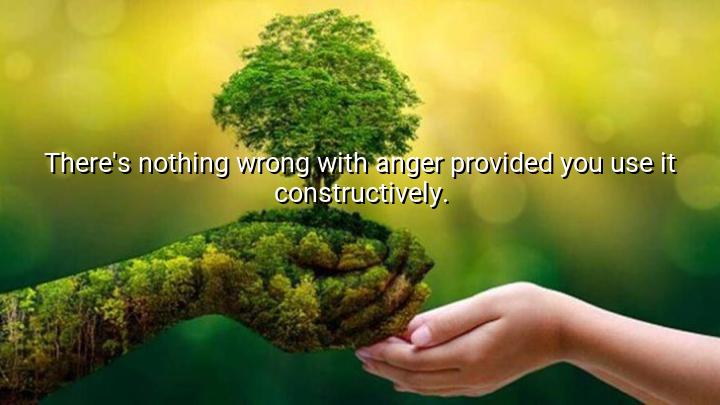




The quote by Wayne Dyer — "There's nothing wrong with anger provided you use it constructively." — acknowledges that anger itself is not inherently bad, but it is how we channel and respond to it that matters. Dyer suggests that anger, when managed properly, can be a source of motivation or energy that drives positive change. Instead of letting anger lead to destructive outcomes, it can be used as a force for growth, action, or addressing issues that require attention.
Dyer's perspective aligns with the idea that anger is a natural, human emotion, and like any emotion, it can either be destructive or constructive, depending on how it is handled. When anger is expressed in a way that promotes understanding, problem-solving, or necessary action, it can lead to solutions rather than conflict. Constructive anger might drive someone to stand up for themselves or others, make necessary changes, or fight against injustice, turning an emotional reaction into a catalyst for positive change.
This viewpoint reflects the broader philosophy of emotional intelligence, which encourages individuals to understand and regulate their emotions in ways that benefit themselves and those around them. Instead of repressing anger or letting it control you, Dyer suggests using it as a tool for making meaningful change. By recognizing the underlying cause of the anger, one can direct that energy toward addressing the root issue rather than letting it fester or lead to harm.
Ultimately, Wayne Dyer's quote teaches that anger, when harnessed constructively, can be a powerful tool for positive action and personal empowerment. It emphasizes the importance of not letting anger consume or control us, but instead using it as a force that contributes to solutions and progress in our lives.

DDat
I appreciate the hopeful tone here, but I’m curious about the practical side. Can constructive anger coexist with forgiveness and peace, or are they opposing forces? Also, how does the intensity of anger affect our ability to use it constructively? Sometimes strong anger feels overwhelming—can it still be harnessed positively, or does it need to be tempered first? I’d love to discuss these complexities.
TTatdatst
This quote resonates with me because it suggests a balance between feeling anger and managing it wisely. I wonder if anger’s constructive use is tied to context—like fighting for justice versus reacting impulsively. How do we teach younger generations to embrace anger without letting it control them? It’d be interesting to explore educational or therapeutic approaches that promote this balanced emotional skill.
NQng quyen
While I agree that anger isn’t inherently bad, I worry about how subjective the idea of ‘constructive use’ can be. Who decides what counts as constructive? Could someone’s constructive anger feel threatening or overwhelming to others? It raises questions about communication and consent in expressing anger. How can people ensure their anger serves a positive purpose without causing unintended harm?
NPNguyen Pham
This quote makes me think about emotional intelligence and self-regulation. Using anger constructively likely requires awareness and control, but how do we cultivate those skills? Is it possible that some people are naturally better at this, or can it be taught to anyone? Also, what role do culture and upbringing play in shaping how we deal with anger? Exploring these factors could offer deeper insight into the quote’s meaning.
BTNguyen Ngoc Bao Tran
This perspective feels empowering because it reframes anger from being purely negative to a potentially useful force. However, I question how realistic it is for everyone to use anger constructively, especially in stressful or heated moments. Are there specific strategies or tools that can help individuals transform anger into something beneficial rather than harmful? I’d love to hear about experiences or techniques that promote this healthy expression of anger.