

There is nothing worse than a sharp image of a fuzzy concept.
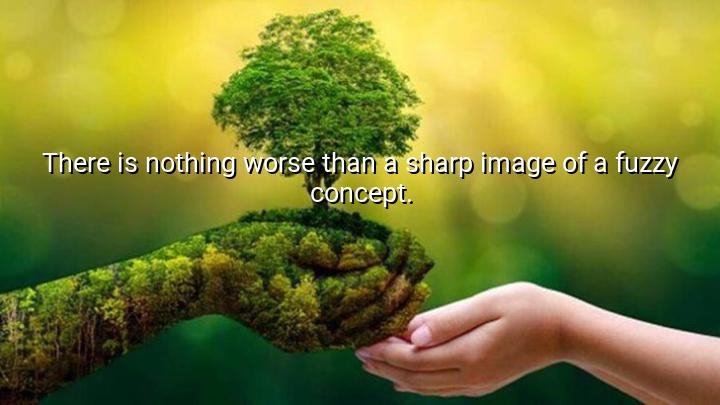




The quote "There is nothing worse than a sharp image of a fuzzy concept" by Ansel Adams speaks to the importance of clarity and purpose in both photography and art. Adams, one of the most renowned American photographers, is emphasizing that while technical perfection in an image—such as sharpness and detail—is important, it is meaningless if the concept behind the image is unclear or unfocused. In other words, an image may be technically excellent, but if the underlying message or idea it conveys is vague or confusing, the photograph loses its impact.
Adams' words also suggest that the true power of art lies in the clarity of its concept or message, not just in its technical execution. A sharp image is only effective when it communicates a clear idea or emotion. If the concept behind the image is fuzzy, no amount of technical precision can make it meaningful. This concept aligns with Adams' approach to photography, where he believed that capturing the emotional and artistic essence of a scene was just as important as the technical details.
The quote also emphasizes the importance of the artist’s vision in creating art. It is not enough for a work to be aesthetically pleasing or well-executed; the artist must ensure that the concept or message they wish to convey is well-defined and clear. Art should not only be seen but also understood, and it is the artist’s job to ensure that their intentions come through clearly, even if the image is complex or abstract.
Ultimately, Adams' quote highlights the idea that in both art and photography, precision should serve clarity of thought. A perfectly executed piece that lacks a clear concept is less powerful than one that might be less technically refined but communicates its message effectively. For Adams, the fusion of technical skill and meaningful concepts is what makes an image truly impactful.

TDDo Thi Dao
Adams’ quote resonates in a world where we see so many perfectly executed but ultimately uninspired works. A sharp image is one thing, but a fuzzy concept behind it? That’s where the real problem lies. It reminds me of how people sometimes confuse style with substance. Can an artist create something both technically perfect and conceptually strong? Or is it a delicate balance where one aspect can overpower the other?
TNQuoc Tuong Nguyen
The phrase 'sharp image of a fuzzy concept' is such a vivid metaphor. It makes me think about how modern technology has led to an overabundance of highly polished, but ultimately shallow, content in art. Is the idea here that a beautiful, technically flawless image can fail to make an impact if the idea is weak or unclear? How can we as artists and viewers move beyond mere aesthetics to look for deeper meaning?
KOKim Orla
This quote seems to be a critique of superficiality in art. Adams is emphasizing the importance of a strong, clear concept to give life to the image. But does this mean that ‘sharp’ visuals without substance are a waste? Or is there room for artistic experimentation where the concept doesn’t need to be immediately clear? How important is it for the viewer to fully grasp the concept of a piece to appreciate it?
XDLuong Xuan Dung
Ansel Adams' words seem so relevant when thinking about how ideas are conveyed in modern visual art. A visually striking image might catch attention, but does it really communicate the artist's intent if the concept behind it is unclear? It seems like art should carry more than just surface appeal. Could this be why some contemporary works feel hollow, despite their visual allure? Is there a balance between technique and concept?
_J__ jmiblue
I find this statement intriguing, especially in the context of photography. A sharp, technically flawless image can look amazing, but if the concept behind it is weak or ambiguous, it almost feels empty. How can we ensure that both the form and concept of a piece align to truly resonate with the viewer? Can art ever be ‘too sharp’ to the point where it distracts from the deeper meaning?