

The opposite of anger is not calmness, its empathy.
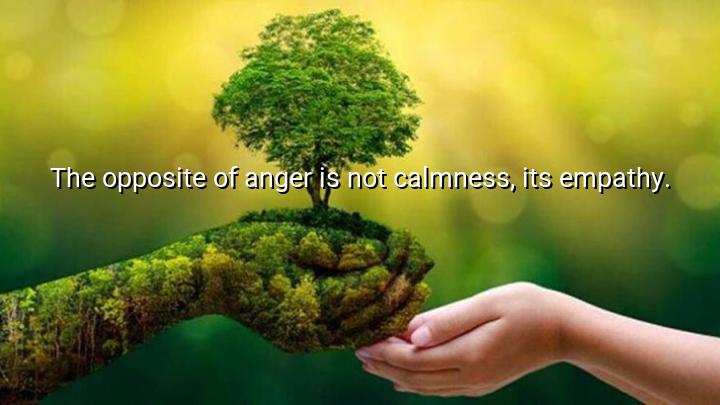




The quote by Mehmet Oz — "The opposite of anger is not calmness, it's empathy." — challenges the conventional notion that the opposite of anger is simply being calm or composed. Instead, Oz suggests that empathy, the ability to understand and share the feelings of others, is the true antidote to anger. While calmness may be a temporary way to manage or suppress anger, empathy addresses the root cause by fostering understanding and connection with the person or situation that triggered the emotion.
Oz’s perspective highlights the emotional intelligence required to move beyond anger. When we cultivate empathy, we are able to step into someone else’s shoes and view a situation from their point of view. This shift in perspective helps us to see beyond our own emotional reactions and avoid the impulse to react with anger. By practicing empathy, we can transform potential conflicts into opportunities for understanding and resolution.
The quote reflects a deeper understanding of human emotions, recognizing that anger often arises from misunderstanding, frustration, or feeling wronged. Rather than merely trying to remain calm, Oz emphasizes that addressing anger with empathy allows for more meaningful communication and emotional growth. It suggests that when we empathize with others, we are less likely to react defensively and more likely to approach challenges with compassion.
Ultimately, Mehmet Oz’s quote teaches that empathy is not just a softer response to anger, but a transformative one. It shifts the focus from merely managing anger to understanding its root causes and addressing them with a deeper, more constructive approach. By practicing empathy, we can build stronger, more compassionate relationships and foster a more peaceful environment.

GDGold D.dragon
This perspective makes me think deeply about emotional intelligence and how we respond to others. Empathy requires stepping into someone else’s shoes, which can defuse anger by validating their feelings. But what about situations where empathy is met with hostility or misunderstanding? Does empathy still hold the power to transform anger then? And how do we protect our own emotional well-being while practicing empathy in challenging scenarios?
MT31. Minh Thu
I’m intrigued but also a bit skeptical. Sometimes, I feel calmness alone can prevent anger from taking hold in the first place. Is empathy always necessary to counter anger, or can calmness sometimes suffice? Moreover, could focusing too much on empathy risk excusing harmful behavior by overly understanding the angry person? I’d love to hear perspectives on balancing empathy with healthy boundaries in emotional situations.
NTNguyen Thuan
The idea that empathy, not calmness, counters anger feels both hopeful and challenging. It suggests that overcoming anger involves active understanding rather than passive tranquility. But does this mean calmness is ineffective, or simply insufficient? I’d like to explore how empathy and calmness can complement each other. Can calmness serve as a foundation for empathy, or do they operate independently in conflict resolution?
TH6_10CB5_nguyen thu ha
This quote resonates with me, especially in understanding interpersonal conflicts. Calmness might create a peaceful exterior, but empathy seems to address the root causes by connecting with the feelings behind anger. It makes me curious: how can we develop empathy in ourselves and others as a way to prevent anger from escalating? Are there specific practices or mindsets that help bridge the gap between anger and empathy effectively?
KNThu Ky Nguyen
I appreciate this perspective because it elevates empathy as a powerful tool in managing anger. But I question if empathy is always achievable when someone is overwhelmed by their own emotions. Can we realistically expect people to feel empathy when they’re in the heat of anger? Also, how do cultural or personal differences impact the ability to respond empathetically rather than just calming down? It seems like a complex skill to cultivate in moments of emotional intensity.