

The one who cannot restrain their anger will wish undone, what their temper and irritation prompted them to do.
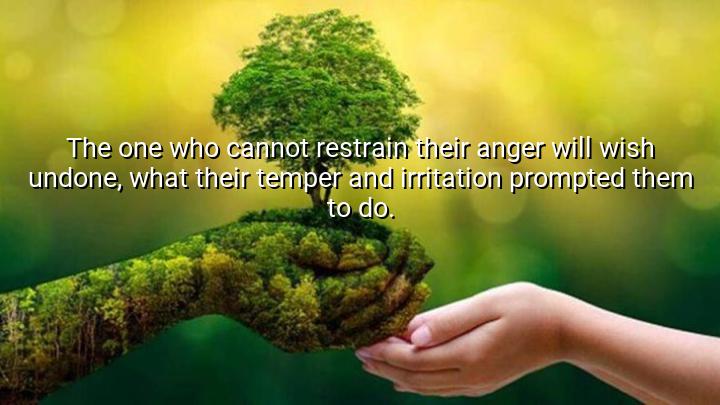




In this quote, Horace reflects on the consequences of anger and how a lack of self-control can lead to regret. He suggests that those who cannot restrain their anger are often driven to act impulsively, allowing temper and irritation to dictate their actions. However, once the initial surge of emotion fades, they will likely wish they had not acted on those feelings. The quote emphasizes that unchecked anger often leads to decisions or actions that one later regrets.
Horace’s words highlight the destructive nature of acting on anger without reflection. In moments of intense irritation, people may say or do things that harm relationships or create problems. These impulsive actions are often fueled by an emotional response, rather than rational thought, making it easy to regret them once the emotions have subsided. This teaches the importance of restraint and emotional control to avoid rash decisions.
The origin of this quote lies in the Roman poet Horace's work, which frequently dealt with themes of self-control, virtue, and the consequences of human behavior. His writings often reflect a deep understanding of human nature, offering insights into how emotions like anger can impact one’s life and relationships. Horace’s exploration of anger as a temporary but dangerous force reveals his concern for the long-term effects of emotional impulsiveness.
Ultimately, Horace’s quote serves as a cautionary reminder about the importance of emotional control. It suggests that anger can cloud judgment and lead to regretful actions, and it encourages individuals to practice patience and restraint in the face of emotional challenges. By doing so, one can avoid the fallout that often follows hasty, anger-driven decisions.

QTDao Quang Truong
This statement highlights the double-edged sword of anger. While it’s a natural emotion, its unchecked expression can cause irreversible harm. How might mindfulness or other practices help individuals become aware of their rising irritation and choose their responses more wisely? Horace’s words remind us of the lasting impact of momentary lapses in control.
TPthanh phong
Horace’s quote raises questions about forgiveness—both self-forgiveness and forgiving others. When anger leads to regrettable actions, how do people recover and rebuild trust? Can acknowledging the inevitability of occasional loss of control help in healing? It’s an important reflection on human fallibility and growth.
DNNguyen Duy Nhan
I’m intrigued by the idea that uncontrolled anger causes actions we later regret. Could this suggest that anger itself isn’t the problem, but how we handle it is? How can people develop healthier outlets for irritation and temper? This quote serves as a reminder that managing emotions is crucial for personal and social wellbeing.
TLTham Le
This quote makes me think about the consequences of letting irritation dictate our actions. Is there a point at which anger becomes a barrier to rational decision-making? How do cultural or individual differences influence the ability to restrain anger? Horace’s insight emphasizes the need for emotional regulation skills to avoid later remorse.
TAThu Anhh
Horace’s warning about unrestrained anger leading to regret is timeless. How often do we act impulsively in anger only to wish we hadn’t? What strategies can help people pause and reflect before reacting emotionally? This quote highlights the importance of self-control in preserving relationships and preventing damage that might be hard to undo.