

The idea is, if I can't heal from my art, then how can you heal?
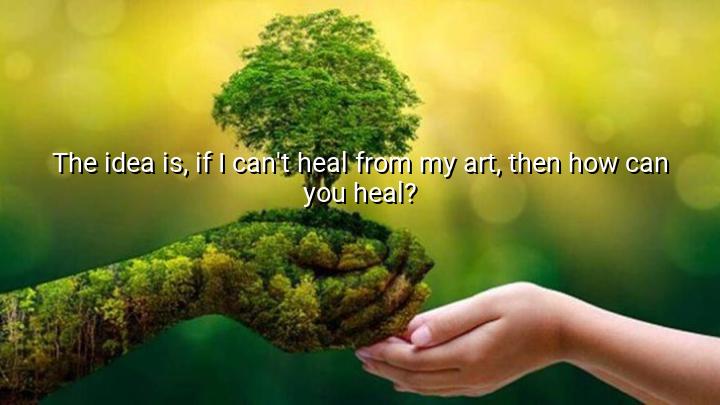




Maynard James Keenan’s quote, “The idea is, if I can't heal from my art, then how can you heal?” reflects a deeply personal philosophy about the therapeutic power of art. As the frontman of bands like Tool, A Perfect Circle, and Puscifer, Keenan is known for creating music that delves into emotional struggle, trauma, and introspection. This quote underscores his belief that art must first serve the artist as a path to healing and self-understanding before it can have a meaningful impact on an audience.
By emphasizing healing, Keenan reveals that his creative process is not just an act of performance but a journey through his own pain, questions, and growth. The quote challenges the idea of art as something produced solely for external consumption. Instead, he frames art as a tool for inner transformation—a space where the artist confronts what is unresolved within. If that process is genuine and effective, then others may find healing in it too, through shared experience and empathy.
This perspective is consistent with Keenan’s lyrics and performances, which often tackle themes like loss, addiction, spiritual crisis, and personal evolution. His fans frequently describe his music as cathartic, precisely because it doesn’t shy away from raw emotional truths. The quote suggests that this authenticity is only possible when the artist uses their medium to process their own wounds, not just to entertain or provoke.
Ultimately, Keenan’s quote reminds us that powerful art emerges from honesty and vulnerability. It affirms that for art to truly resonate, it must first come from a place of self-reflection. In healing himself through his art, the artist opens the door for others to begin their own healing journeys, making art a shared, transformative experience.

TTien
This quote really speaks to the weight artists carry—the idea that they must go first, dive deep, and emerge with something that can help others. But is that fair? Should we expect artists to bleed emotionally just so their audience can heal? There’s beauty in shared vulnerability, sure, but I wonder if we sometimes romanticize the artist’s pain instead of respecting their boundaries or limits.
HHPham Thi Hong Hanh
This brings up the question of whether the act of creating is always inherently therapeutic. I mean, what happens when making art becomes more of a trigger than a salve? If the artist can’t find peace through their work, does it invalidate the impact it could still have on someone else? Or maybe it’s more about intention—using art as a tool for healing, regardless of whether healing is fully achieved.
TTtien thuy
I'm struck by how this quote challenges the artist’s responsibility—not just to create, but to be emotionally honest and open. But what about the idea that healing is nonlinear? If an artist is in pain and creates something raw and unresolved, does that make the art more relatable? Or is Keenan suggesting that true emotional resonance requires the artist to reach a certain place of closure first?
3NNhat tien 30 nguyen
Keenan’s words hit hard. It feels like he’s drawing a line between performative art and truly lived, emotive expression. But isn’t there also value in creating art that isn’t necessarily healing for the artist but still meaningful to the audience? I’m torn—can art made for others, not the self, still hold that same emotional charge? Or does it risk becoming hollow without that personal catharsis?
DDTa Dang Dang
This makes me wonder: is art only powerful when it comes from a place of personal transformation? If an artist hasn’t processed their own wounds through their work, can it still resonate with others? Or is that authenticity crucial? I’ve always believed that vulnerability in art creates a bridge to others, but does that mean the artist must be fully healed, or can the process of sharing be healing in itself—for both parties?