

The deferring of anger is the best antidote to anger.
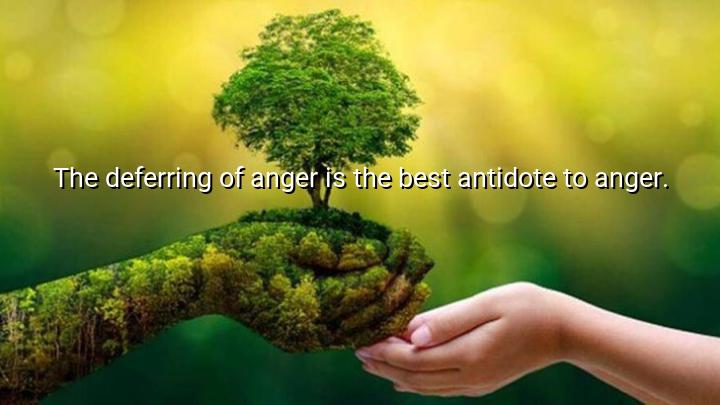




In this quote, Lucius Annaeus Seneca presents the idea that deferring or delaying anger is the most effective way to counteract it. Rather than acting impulsively when anger arises, Seneca advocates for taking a moment to pause and allow the emotion to settle. By delaying the expression of anger, one creates space to regain control and avoid making rash decisions or causing harm to oneself or others.
Seneca’s teaching here reflects his broader Stoic philosophy, which emphasizes the importance of self-control and rationality in the face of strong emotions. He believed that immediate reactions to anger often lead to regret and further complications. By postponing the response, a person can reflect on the situation, assess it more clearly, and choose a more measured and thoughtful course of action.
The idea of deferring anger also speaks to the power of emotional regulation. When anger is given time to dissipate, it loses its intensity and becomes easier to manage. This allows individuals to make decisions from a place of calm rather than being swept away by the heat of the moment. Seneca’s wisdom suggests that emotional clarity and better judgment emerge when one can prevent anger from taking immediate control.
Ultimately, Seneca’s quote encourages us to practice patience and restraint when anger arises. By deferring anger and allowing it to subside, we protect ourselves from its negative consequences and foster healthier, more thoughtful responses to difficult situations. This principle of delayed reaction is a cornerstone of Stoic philosophy and offers a powerful tool for managing emotions in all areas of life.

HLvu dang ha linh
This quote feels very Stoic and elegant, but I wonder if it risks encouraging emotional detachment. Is deferring anger always the healthiest option, or does it risk disconnecting us from our feelings and needs? Sometimes immediate anger highlights a boundary that’s been crossed. If we always wait, do we risk becoming emotionally numb or inauthentic? I’d love to understand how to balance this kind of emotional discipline with genuine expression.
QNQuynh Nguyen
I find this idea appealing in theory, but hard to apply in real-time. Anger is such a visceral emotion, and when you're triggered, deferring it feels unnatural. Is the key to practice emotional regulation ahead of time, like preparing your mindset in advance? Or is it about building the habit slowly, like counting to ten or stepping away? I’d like more insight into the mechanics of how it’s actually done.
QNQuynh Nguyen
While I appreciate the sentiment, I’m not sure deferral works in every cultural or personal context. In some environments, speaking up immediately is seen as necessary and even respected. Would waiting make someone seem passive or weak? I think context matters a lot—what works in one situation could backfire in another. Should this kind of advice be more nuanced depending on the emotional and social setting?
BNNguyen Bao Ngan
This quote makes me wonder about the practical ways people actually manage to defer their anger in high-stress situations. Is it just about walking away in the moment, or are there deeper techniques like mindfulness or journaling that make it more effective? I’d love to hear how others apply this idea, especially in relationships where tensions can escalate quickly if emotions aren’t handled with care.
HYDinh Hai Yen
I understand the wisdom in delaying a reaction, but does that always lead to emotional resolution? Sometimes I feel like if I don't express my anger right away, it simmers and turns into resentment. Is there a difference between deferring and suppressing anger? I’d really like to know how we can tell when postponement is helpful and when it just becomes emotional avoidance that backfires later.