

The artist vocation is to send light into the human heart.
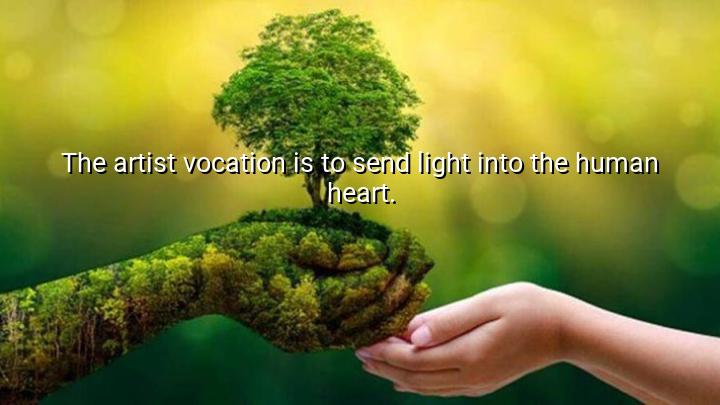




The quote "The artist vocation is to send light into the human heart" by George Sand speaks to the profound impact that art can have on the human soul. For Sand, an artist's primary purpose is not just to create beautiful works but to illuminate the deeper, often hidden emotions within individuals. The "light" here symbolizes knowledge, enlightenment, and emotional clarity that art brings to the viewer, helping them understand themselves and the world around them in new ways.
George Sand, a famous 19th-century French novelist and musician, was deeply concerned with social and emotional issues. She saw art as a means to elevate the human spirit, often using her writing to challenge societal norms and encourage emotional growth. For her, the artist's role was not to create for the sake of beauty alone, but to touch the hearts of others and inspire reflection, understanding, and healing.
The metaphor of "light" suggests that art can be a source of guidance and clarity, shining through the darkness of confusion, pain, or ignorance. Sand believed that through their work, artists could lead people to greater self-awareness and connection to their emotions, offering a cathartic release and deeper empathy toward others. This view emphasizes the transformative power of art to change hearts and minds.
Ultimately, the quote emphasizes that an artist's work has the potential to go beyond aesthetic beauty; it can be a force for emotional healing, growth, and human connection. Sand’s words serve as a reminder that art is not merely about visual or intellectual enjoyment but about touching the core of human experience and creating lasting, meaningful change.

VHTran Van Hai
This quote brings a tear to my eye. It really captures why art matters—because it reaches parts of us that words or logic can’t. I’ve experienced that kind of light through a song or a painting that suddenly made me feel seen or understood. I just wonder, though, does this definition of the artist’s purpose exclude abstract or conceptual art that doesn’t aim to touch the heart directly? Can intellect and emotion coexist in this vision?
GDGold D.dragon
I appreciate the sentiment here. It suggests that artists have a moral or spiritual mission, which elevates their role in society. But does that imply that commercial or purely aesthetic art is somehow less meaningful? What about artists who just want to explore form, color, or absurdity? I think this quote celebrates the emotional potential of art, but I’m curious about how broadly we define what 'sending light' actually looks like in practice.
HLHieu Luongdinh
Sand’s quote resonates with me deeply, especially in a time when the world feels so heavy. It reminds me why we turn to music, paintings, poetry—they reconnect us with hope. But it also makes me wonder if this places too much pressure on artists. Should every piece of art strive to be uplifting? Can catharsis through sorrow or anger still be considered 'light'? I’d love to hear thoughts on how art can heal in different emotional registers.
DVDat Vuong
I find this quote beautiful but maybe a little one-sided. Art certainly has the power to uplift, but sometimes its role is to disturb or provoke. Is it fair to say that an artist’s vocation is to bring light, when some artists deliberately explore the shadows? Maybe the real calling is to create truthfully, whether that truth is light or darkness. Still, I love how this line emphasizes empathy and emotional connection.
LKLinh Khanh
This quote feels incredibly hopeful and idealistic. I love the image of art as a kind of emotional illumination, like artists have a responsibility not just to express but to heal, inspire, or awaken something in us. But I wonder—can all artists really take on such a noble task? What about art that’s intentionally dark, confrontational, or challenging? Does that count as light, too, if it leads us to growth or understanding?