

The beauty that addresses itself to the eyes is only the spell of the moment; the eye of the body is not always that of the soul.
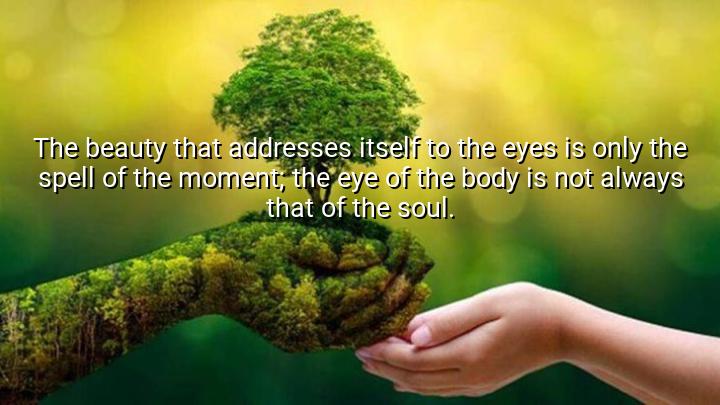




In the quote by George Sand, "The beauty that addresses itself to the eyes is only the spell of the moment; the eye of the body is not always that of the soul," Sand draws a distinction between superficial beauty and deeper, more meaningful perceptions. She suggests that the physical, visual beauty we experience through our eyes is fleeting and can easily deceive us, capturing our attention in the moment without revealing true substance. However, true beauty goes beyond what is visible to the eye and is understood through a deeper connection to the soul, indicating that authentic beauty is felt and recognized not just through the body but through inner awareness.
The origin of this quote lies in Sand’s broader philosophical and literary explorations of human nature and perception. As a French novelist and philosopher, Sand often delved into themes of love, self-awareness, and personal growth, questioning societal values and the way we define beauty. She believed that the external world often masks the true nature of things, and only through deeper reflection and understanding could we recognize the beauty that exists beyond the surface.
Sand’s mention of the eye of the body and the soul further emphasizes her belief that how we perceive the world is influenced by both our external senses and our internal experiences. The eye of the body sees what is presented to us—often influenced by societal standards or immediate emotions. But the eye of the soul perceives a richer and more authentic form of beauty that is not bound by momentary impressions or shallow judgments, suggesting that beauty is as much about emotional resonance and personal connection as it is about visual appearance.
Ultimately, Sand’s quote invites us to reconsider how we define beauty and encourages a deeper understanding of it. By recognizing that true beauty cannot be solely confined to what is seen, she suggests that we should cultivate the ability to perceive beauty with our inner selves, appreciating the depth and lasting qualities of things rather than being distracted by fleeting external appearances.

AAdministratorAdministrator
Welcome, honored guests. Please leave a comment, we will respond soon