

The artist must create a spark before he can make a fire and before art is born, the artist must be ready to be consumed by the fire of his own creation.
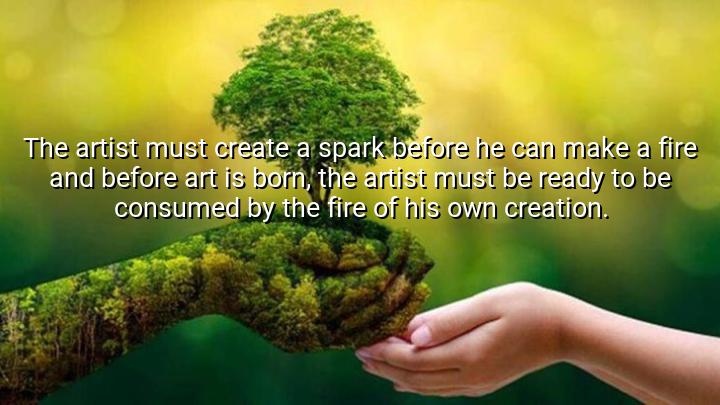




Auguste Rodin’s quote, "The artist must create a spark before he can make a fire and before art is born, the artist must be ready to be consumed by the fire of his own creation," highlights the intensity and sacrifice involved in the artistic process. The "spark" represents the initial idea or inspiration, the starting point of creation. However, this small spark alone is not enough; the artist must nurture it and fuel it into a fire, symbolizing the full development of the work into something powerful and transformative.
The second part of the quote, "the artist must be ready to be consumed by the fire of his own creation," speaks to the dedication and passion required for true artistic expression. Rodin suggests that creating art is not a passive act; it demands complete immersion. The artist must be willing to surrender to their work, allowing it to consume them in the process. This intense commitment can lead to moments of personal transformation, where the artist is deeply affected by the very thing they are creating.
Rodin’s perspective reflects his own experience as a sculptor, where he often engaged in a highly personal and immersive process of creation. For him, art was not just about technical skill but about a profound emotional and psychological investment. The idea of being "consumed" by the work indicates the sacrifice involved—artists must often put aside their own comfort and desires in order to fully bring their vision to life.
Ultimately, this quote speaks to the transformative and all-encompassing nature of art. For Rodin, the act of creating is not just about producing something beautiful but about embracing the struggle, the passion, and the potential destruction that comes with the process. It is only by fully surrendering to the creative process that true art can emerge, born from the fire of dedication and emotional depth.

GTgiang trung
This quote resonates deeply, especially for those who’ve felt their identity merge with their creative pursuits. But is it sustainable? In today’s world of hustle culture and burnout, how do we reconcile this idea of being consumed by creation with the need to preserve one’s well-being? Can modern artists find a new model—one that channels fire without being destroyed by it?
H611 pham sy hung 6a9
Rodin’s imagery is so vivid. It makes me think about the emotional investment behind masterpieces we often admire passively. Do we, as consumers of art, fully appreciate what artists endure to bring their vision to life? Should we be more mindful or even more responsible in how we engage with and support those who create?
TTTruc Thanh
Reading this, I’m struck by how dramatic and intense the creative journey can be. I’ve felt glimpses of this ‘spark’ while writing or designing, but I wonder—how do artists know when to pull back? How do they keep from burning out if they’re constantly feeding the fire of their own work? Is discipline just as important as inspiration when navigating that process?
KNKim Ngan
There’s a romanticism here that I’m not sure I agree with. Should creating art really be a destructive process for the artist? I get that passion and depth are important, but what about joy, curiosity, or even calm reflection? Why does society often glorify the idea of the ‘tortured artist’? Can we shift the narrative to one where inspiration doesn’t require self-immolation?
QTQuang Tri
I find this quote both powerful and haunting. It seems to imply that true art requires the artist to be willing to lose themselves in their work. Is this why so many brilliant artists also struggle mentally or emotionally? I wonder if this ‘consumption’ is more metaphorical or if Rodin meant it literally. Can one channel intense passion without being entirely overtaken by it?