

Sometimes it's worse to win a fight than to lose.
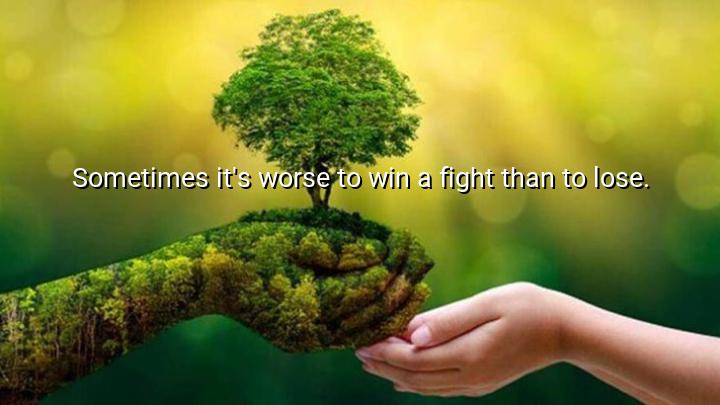




In this quote, Billie Holiday reflects on the idea that winning a fight or confrontation doesn’t always lead to a positive outcome. She suggests that sometimes the consequences of victory can be more damaging than the loss itself. Winning a fight might bring temporary satisfaction or relief, but it can leave emotional scars, destroy relationships, or result in feelings of regret. The aftermath of a victory can sometimes make the struggle feel hollow or leave lingering bitterness.
Holiday’s words touch on the complexity of conflict and how emotions play a significant role in how we process outcomes. Winning a fight can sometimes mean losing something more important, such as peace of mind, trust, or personal integrity. In these situations, the cost of victory may outweigh the benefits, leaving the winner with a sense of emptiness or damage that could have been avoided through compromise or forbearance.
As a legendary jazz singer known for her deep emotional expression, Billie Holiday often explored themes of heartbreak, struggle, and personal conflict in her music. This quote reflects her own life experiences, marked by emotional turmoil and the difficulties of navigating personal relationships and societal expectations. Holiday’s recognition of the emotional toll of fighting highlights her understanding of how triumph in one area can lead to pain in another.
Ultimately, Holiday’s quote serves as a reminder that sometimes the best way to resolve conflict is not by seeking victory, but by considering the deeper costs of engaging in the fight. It encourages reflection on whether the pride or satisfaction gained from winning is truly worth the potential harm it may cause to one’s emotional or relational well-being.

MPMy Pe's
Reading this, I wonder about the role of pride and ego in how we perceive winning and losing. Can clinging to a win blind us to the damage we cause? How do we cultivate wisdom to know when to prioritize peace over victory? I’m interested in exploring stories where losing was a catalyst for greater personal growth or stronger relationships.
HQHong Quyen
This quote makes me think about personal and professional conflicts where victory doesn’t bring satisfaction. Could winning create enemies or foster resentment that lasts longer than the fight itself? How do people cope with the aftermath of a ‘win’ that feels hollow? It raises important questions about the meaning of success and whether some losses are more valuable than wins.
ANAn Nguyen
It’s interesting to consider that winning can sometimes feel like a loss. Could this be related to how we win—whether through compromise, aggression, or at the expense of others? How might this insight affect how leaders or negotiators approach conflicts? I’d like to hear thoughts on balancing assertiveness with empathy to avoid ‘winning’ in ways that ultimately harm everyone involved.
LTLuan Thien
This quote challenges the common belief that winning is the ultimate goal. Does it suggest that some battles are not worth fighting at all? How do we recognize when to fight and when to walk away? It makes me think about the emotional toll of winning a fight—can it leave scars as deep as losing? I’m curious about how this perspective influences conflict resolution.
KPK Psy
I find this idea quite profound—winning isn’t always positive. Could winning a fight lead to unintended consequences, like guilt, regret, or alienation? How often do people realize too late that their victory came at a high price? I’d love to explore examples where ‘winning’ actually made things worse and how we can approach conflicts more mindfully to avoid those pitfalls.