

Solitude is the place where we can connect with profound bonds that are deeper than the emergency bonds of fear and anger.
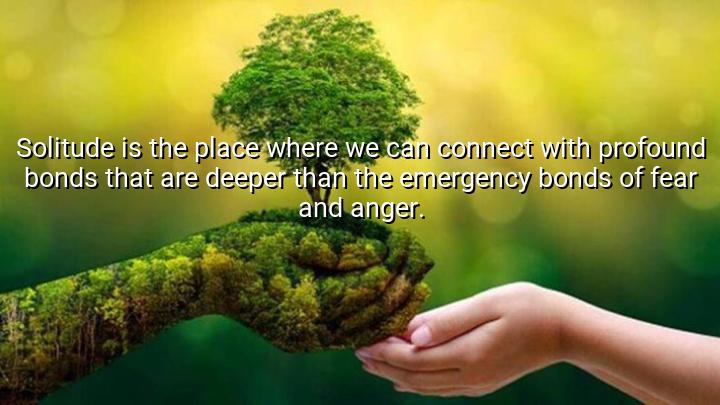




Henri Nouwen’s quote speaks to the transformative power of solitude in allowing individuals to connect with deeper, more meaningful aspects of themselves and their relationships. Nouwen contrasts solitude with the emergency bonds that are often formed in moments of fear and anger, suggesting that while such emotional responses may create temporary connections, they are typically shallow and driven by immediate survival instincts. In contrast, solitude provides the space to reflect, heal, and cultivate more profound connections that are rooted in understanding, peace, and spiritual growth.
The phrase “emergency bonds of fear and anger” highlights the reactive nature of connections formed during times of crisis. These bonds, while real, are often based on the need for self-preservation or defense, and they lack the depth and authenticity that come with more thoughtful, intentional relationships. In these moments, people may come together out of necessity rather than genuine connection, and the emotions driving these connections are often disruptive or negative.
Nouwen implies that solitude, in contrast, offers an opportunity to move beyond these reactive emotions and cultivate relationships that are more enduring and meaningful. In the stillness of solitude, one can connect with their inner self, experience a deeper sense of peace, and form bonds that are based on love, trust, and understanding rather than fear. This deeper level of connection can lead to personal growth and a more compassionate outlook on life.
Ultimately, Nouwen’s quote emphasizes the value of solitude not as a form of isolation, but as a sacred space where we can connect with what truly matters. It offers a way to move beyond the anger and fear that often cloud our judgment, allowing us to form relationships that are rooted in genuine emotional depth and spiritual clarity.

BNNguyen Quynh Bao Ngoc
This quote invites a fresh perspective on solitude—not as loneliness, but as a deeper form of connection. How can individuals distinguish between solitude that heals and solitude that isolates? Might society undervalue solitude and its benefits because of the fear of being alone? I’m curious about how cultural attitudes toward solitude impact our emotional well-being and ability to handle difficult emotions like anger.
MNHoang Man Nguyen
I find it interesting that solitude is portrayed as a space beyond fear and anger, emotions that often dictate our immediate responses. Could learning to embrace solitude help us respond more thoughtfully rather than react impulsively? What challenges might people face when trying to create this kind of solitude, especially in busy or chaotic environments? This makes me reflect on the value of stillness in emotional regulation.
BNBao Nghi
Nouwen suggests that the bonds formed in solitude are ‘profound’ and not driven by urgent emotions. Does this mean that solitude allows us to access parts of ourselves that are often overshadowed by daily stresses? How might this deeper connection transform our interactions with others? I’d love to explore how solitude can be intentionally incorporated into mental health practices or spiritual growth.
KNDao Thi Kim Ngan
This quote highlights solitude as a refuge from reactive emotions like fear and anger. But can solitude also bring up loneliness or exacerbate negative feelings? How do we balance the need for solitude with the human desire for connection? I’m curious about practical ways to use solitude as a tool for emotional growth without slipping into isolation or despair.
MQNguyen Minh Quang
Henri Nouwen’s view on solitude as a place for deeper connection beyond fear and anger resonates with me. How do we cultivate this solitude in a world that constantly demands our attention? Is solitude about being physically alone, or is it more about mental and emotional space? I wonder if embracing solitude could help people heal from emotional turmoil and build more authentic relationships with themselves and others.