

Poverty is the absence of all human rights. The frustrations, hostility and anger generated by abject poverty cannot sustain peace in any society.
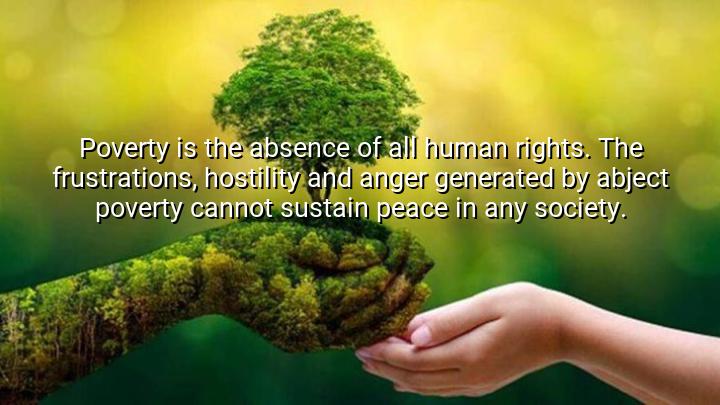




Muhammad Yunus’ quote powerfully links poverty to the deprivation of human rights, emphasizing that when individuals are deprived of basic needs and opportunities, they are denied fundamental aspects of their dignity and freedom. Yunus suggests that poverty is not just an economic issue, but a human rights issue that affects individuals' ability to live with equality, security, and opportunity. The lack of resources and access to essential services creates a state of social injustice, where people are left to struggle for survival, leading to a loss of self-worth and the capacity for personal growth.
Yunus also points out that the frustrations, hostility, and anger arising from such extreme conditions are natural emotional responses to being marginalized and oppressed. When people are trapped in abject poverty, their basic needs for food, shelter, healthcare, and education are unmet, leading to feelings of hopelessness and resentment. These emotions can build over time, resulting in social instability and the inability to foster peace within society. The intensity of these negative emotions cannot be ignored, as they are bound to disrupt social cohesion.
Moreover, Yunus argues that the anger and hostility stemming from poverty can lead to destructive consequences, preventing the creation of a peaceful society. As he notes, if a significant portion of the population feels disenfranchised and oppressed, peace cannot be sustained, as the underlying causes of frustration and division will always resurface. This highlights the necessity of addressing poverty as a root cause of conflict, rather than simply managing its symptoms.
Ultimately, Yunus’ quote calls for a broader understanding of poverty, urging societies to recognize it not just as an economic issue, but as one that undermines human rights and disrupts the potential for lasting peace. It serves as a reminder that addressing poverty is essential for the health of any society, and without justice and equality, peace cannot truly thrive.

SSsp sp
I can’t help but reflect on the emotional toll poverty takes, as Yunus highlights. The frustration and anger make so much sense when you think about what’s being denied: not just food or shelter, but opportunity, respect, and security. Can art, education, or storytelling play a role in changing how people see poverty—not as a distant issue, but as a shared human crisis worth solving together?
KKien
I resonate with the urgency of this message, but I also feel a bit overwhelmed by it. If poverty is truly a denial of rights, does charity alone even scratch the surface? What responsibilities do individuals have beyond donating money? Should we be more politically active, push for structural reforms, or even rethink capitalism altogether? The quote makes me feel morally implicated just by living in comfort.
THNguyen Thi Thuy Huong
This quote made me pause. If we accept that poverty fuels hostility and undermines peace, what does that mean for international relations? Are we doing enough in foreign aid or global partnerships to address poverty as a root cause of conflict? It seems like so much effort goes into treating the symptoms—refugee crises, civil unrest—without fixing the core problem. Shouldn’t diplomacy begin with economic justice?
NANgoc Anh
I find this quote deeply moving—and disturbing. It implies that peace isn’t just about diplomacy or policing but about fairness at the most basic level. I’m curious though: what kind of models have actually succeeded in transforming the conditions Yunus describes? Microfinance is one, obviously, but are there broader approaches that have shown real promise in restoring rights and dignity in impoverished communities?
TTTo Thi Thuy
Yunus paints poverty as a kind of systemic violence, and I think he's absolutely right. But what gets me is how normalized poverty has become, especially in wealthier nations. Why do we treat it like a personal failure rather than a structural breakdown? If it's true that poverty breeds anger and instability, shouldn’t every government make its eradication the highest priority for national security and social cohesion?