

People won't have time for you if you are always angry or complaining.
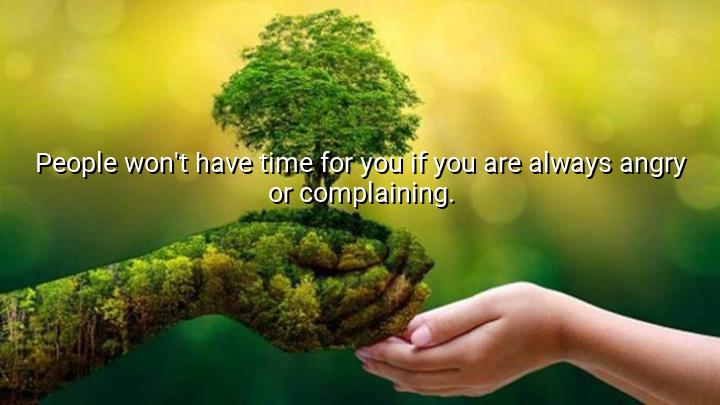




The quote by Stephen Hawking — "People won't have time for you if you are always angry or complaining." — speaks to the negative impact that constant anger and complaining can have on our relationships and social interactions. Hawking suggests that when a person is consistently upset or dissatisfied, they become difficult to be around. People are less likely to engage with someone who is frequently negative, as it creates a draining and unproductive atmosphere.
Hawking’s words also reflect the idea that anger and complaints can isolate a person. While everyone experiences frustration, when it becomes a regular habit, it drives others away. Negativity can overshadow positive interactions, and those around us may begin to avoid our company to protect their own well-being. This speaks to the importance of balance in expressing emotions and maintaining healthy, supportive relationships.
The quote also highlights the value of positivity and gratitude. When we focus on solutions rather than dwelling on problems, we invite more meaningful and rewarding connections with others. People are more likely to engage with individuals who offer constructive dialogue and emotional support, rather than those who are stuck in a cycle of anger or complaining.
Ultimately, Hawking’s quote reminds us of the importance of emotional self-regulation. If we constantly express anger or dissatisfaction, we risk alienating ourselves from others. By managing our emotions and cultivating a more positive mindset, we can foster better connections and make time for more fulfilling relationships.

QHquoc huy
I feel a bit conflicted because, on one hand, constantly being negative can alienate people, but on the other, suppressing genuine feelings isn’t healthy either. Does this mean we should always mask our true emotions to keep social bonds? How can we create safe spaces where people can share frustrations without being judged or abandoned? I’d love to explore practical ways to handle this delicate balance.
GDGold D.dragon
This quote makes me question whether the problem lies in the anger and complaining itself or how it’s expressed. Is it possible that people might tolerate or even appreciate honesty if it’s communicated constructively? What role does tone, timing, and empathy play in how others respond to complaints? I’m interested in how communication style affects whether we maintain relationships despite negativity.
LDLinh Do
It’s interesting to think about social dynamics here. Do people avoid those who express anger or complaints because it’s uncomfortable, or because it signals unresolved issues? If so, what does that say about our society’s ability to handle emotional honesty? Should we be teaching better ways to engage with people’s frustrations instead of just avoiding them?
VTLe Van Tuong
This makes me reflect on times when I’ve pulled away from friends who were constantly negative. It can be draining, but I also think about how sometimes anger or complaints are cries for help. Could dismissing those feelings lead to isolation for people who actually need support? How do we cultivate patience and understanding without letting negativity consume our own well-being?
THGiap Thi Hang
I see this as a reminder of how important emotional energy is in social interactions. But I worry—does this put too much pressure on people to always be positive, even when facing serious challenges? What if someone’s anger or complaints are valid and deserve attention? How do we differentiate between unhealthy negativity and necessary expression of grievances in friendships or work?