

Nature is the art of God.
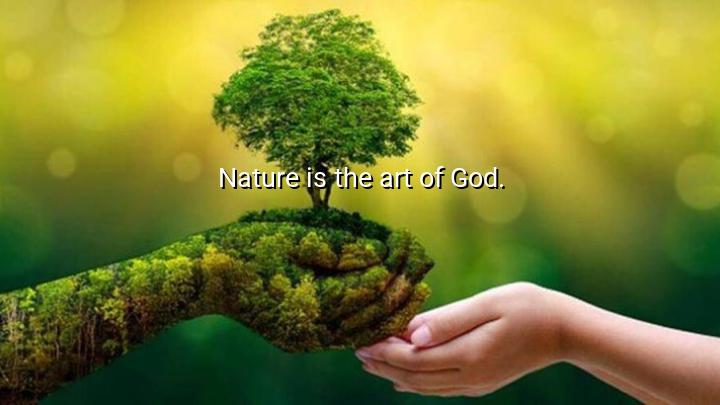




The quote "Nature is the art of God" by Dante Alighieri reflects the idea that nature is a divine creation, a masterpiece crafted by God. Dante, an Italian poet best known for his work The Divine Comedy, often explored the relationship between the spiritual and the natural world. In this quote, he suggests that the natural world, with its beauty, complexity, and harmony, is not random but a reflection of God's artistic and creative nature. The landscapes, creatures, and systems of nature are all seen as a form of art that reveals divine order.
Dante’s perspective positions nature as a sacred expression of God's will and intelligence. Just as an artist creates a work that reflects their thoughts, emotions, and values, nature reflects the divine mind. The quote suggests that by observing and appreciating the beauty and intricacy of nature, we are witnessing a form of spirituality and understanding of God's creation. Nature, in this sense, becomes a living, breathing expression of divine art, inviting humans to experience the sacred through the physical world.
The idea that nature is the art of God also speaks to the perfection and order inherent in the natural world. From the stars in the sky to the smallest leaf, everything in nature is part of a larger, purposeful design. This concept has been explored by many religious and philosophical thinkers, who argue that nature’s perfection is evidence of the divine creator’s presence and influence in the world.
Ultimately, Dante’s quote highlights the connection between art and divinity, suggesting that the natural world is not just something to be admired for its aesthetic qualities, but something to be revered as a manifestation of God’s creativity. Nature becomes not only a source of inspiration but also a means of connecting with the divine and recognizing the spiritual dimensions of the world around us.

KPKhiet Phan
I find this quote very moving, especially because it connects divine intent with something universally accessible. Unlike most art, which can be exclusive or elite, nature is something everyone can experience. But does that make it less appreciated? Sometimes I think we take it for granted because it's always there. Maybe if we thought of it as sacred or artistic, we’d treat the environment with more care and reverence.
ATVo Anh Thu
This quote instantly reminds me of moments in nature that felt almost too perfect to be random—like a forest after rain or the symmetry of a snowflake. It raises the question: is our sense of awe something spiritual, or is it just our brain reacting to complexity and pattern? I wonder if the idea that nature is art is less about theology and more about the human need to find meaning in beauty.
MHTran Le Manh Hung
There's something comforting about thinking of nature as a form of divine creativity. It almost frames every sunrise, mountain, or leaf as part of a cosmic masterpiece. But does that also mean natural disasters are part of this 'art'? How do we reconcile the destructive side of nature with this elevated view? Is it a reminder of balance, or does it challenge the idea of intentional beauty altogether?
BNBao Nghi
I love this quote because it connects faith with creativity in such a poetic way. But it also makes me question how we treat the natural world. If we see nature as divine art, shouldn’t we protect and preserve it with the same respect we give to a sacred painting or sculpture? It’s kind of heartbreaking how often we forget that, even when surrounded by beauty we didn’t create ourselves.
GDGold D.dragon
Dante’s quote feels deeply spiritual, but I’m curious—how does this idea translate for people who don’t believe in a deity? Can nature still be seen as 'art' without the need for a divine artist? Maybe it’s less about religion and more about wonder, about recognizing design or meaning in something that exists beyond our control. I wonder how this idea resonates across different philosophical or cultural frameworks.