

The customs and fashions of men change like leaves on the bough, some of which go and others come.
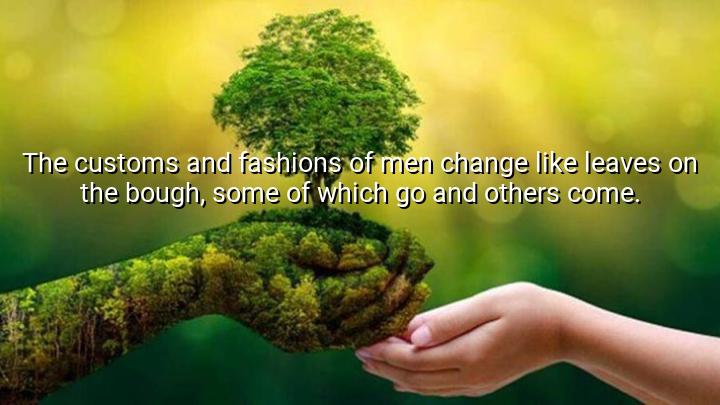




This poetic quote by Dante Alighieri, the illustrious Italian poet and author of The Divine Comedy, reflects on the fleeting and ever-evolving nature of human behavior, particularly customs and fashions. When Dante says, “The customs and fashions of men change like leaves on the bough,” he is drawing a natural and vivid simile, comparing societal trends to leaves that grow, fall, and are replaced. Just as trees shed their old leaves and sprout new ones, human societies constantly evolve, discarding old norms and adopting new ones.
The continuation, “some of which go and others come,” emphasizes the cyclical and transient nature of these changes. Traditions, habits, and social norms are not permanent; they are shaped by time, culture, and circumstance. Dante's observation suggests that what is popular or acceptable today may be forgotten tomorrow, and vice versa. It’s a reminder that change is the only constant in the realm of human culture.
The origin of this quote is found in Dante’s reflections throughout The Divine Comedy, especially in Purgatorio, where he often meditates on moral, philosophical, and social themes. Writing in the early 14th century, Dante was deeply aware of the shifting political and cultural landscapes of his time, and he frequently used metaphor and allegory to comment on the impermanence of earthly things compared to the eternal truths of the spiritual realm.
Ultimately, this quote reminds us of the importance of maintaining a long-term perspective amid rapidly changing trends. While customs and fashions come and go, virtue, wisdom, and truth—central themes in Dante's work—remain timeless. His words encourage us to engage with the present while staying rooted in deeper, more enduring values.

AAdministratorAdministrator
Welcome, honored guests. Please leave a comment, we will respond soon