

Everyone thinks of changing the world, but no one thinks of changing himself.
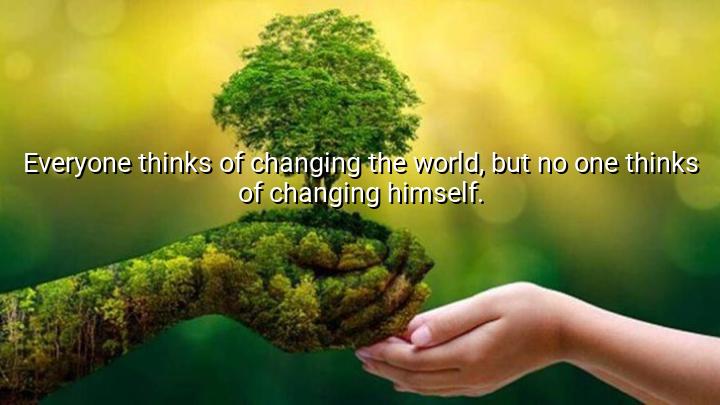




The quote “Everyone thinks of changing the world, but no one thinks of changing himself” is attributed to Leo Tolstoy, the renowned Russian novelist and philosopher, best known for literary masterpieces like War and Peace and Anna Karenina. Tolstoy was deeply concerned with questions of morality, personal responsibility, and social change. This quote reflects his belief that true transformation in society begins with self-change rather than attempting to alter external circumstances without introspection.
By highlighting that “everyone thinks of changing the world,” Tolstoy points to the common desire to improve society, address injustice, or solve global problems. However, he contrasts this with the tendency of people to overlook the more challenging task of examining and improving their own behaviors, beliefs, and attitudes. This suggests that without personal growth, efforts to change the world are often superficial or ineffective.
The quote underscores the importance of self-awareness and personal accountability as prerequisites for meaningful societal progress. Tolstoy believed that when individuals commit to changing themselves—cultivating virtues like kindness, humility, and integrity—they become agents of authentic and lasting change. This inward transformation is the foundation upon which broader social reform can be built.
Ultimately, Tolstoy’s words encourage a shift in focus from external blame to internal responsibility. They remind us that to truly impact the world, we must first be willing to reflect on and transform our own character and actions. His message remains a timeless call to personal growth as the first step toward collective betterment.

AAdministratorAdministrator
Welcome, honored guests. Please leave a comment, we will respond soon