

There is no greatness where there is no simplicity, goodness and truth.
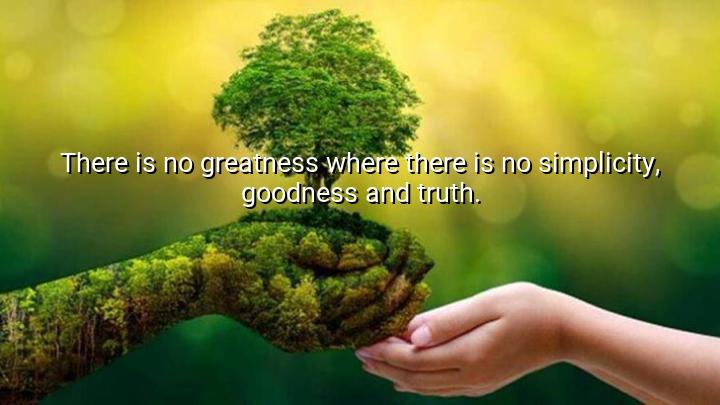




In this quote, Leo Tolstoy suggests that true greatness cannot exist without the fundamental virtues of simplicity, goodness, and truth. He emphasizes that greatness is not defined by external achievements or grand gestures, but by the inner qualities that guide a person's character and actions. According to Tolstoy, greatness arises from living in a way that is authentic, humble, and grounded in moral integrity.
The reference to simplicity indicates that greatness comes from leading a life that is uncomplicated and unpretentious, free from excessive complexity or materialism. Goodness points to the importance of acting with kindness, compassion, and a sense of justice. Truth, on the other hand, refers to being honest and transparent, both with oneself and others. Tolstoy argues that these qualities must coexist for someone to truly be considered great.
The origin of this quote is rooted in Tolstoy's deep philosophical and spiritual beliefs, which were reflected in much of his later work. Known for his exploration of morality and human nature, Tolstoy believed that true fulfillment and moral greatness came from living a life based on these core values. His later works, such as War and Peace and Anna Karenina, explore themes of personal growth, truth, and integrity in the context of society.
Ultimately, Tolstoy’s quote encourages us to seek greatness through internal virtues rather than external validation. It underscores the idea that moral values such as simplicity, goodness, and truth are the true measures of greatness, which transcend fame, wealth, or power. Tolstoy invites us to live in a way that reflects these essential qualities for a life of lasting impact and integrity.

AAdministratorAdministrator
Welcome, honored guests. Please leave a comment, we will respond soon