

All violence consists in some people forcing others, under threat of suffering or death, to do what they do not want to do.
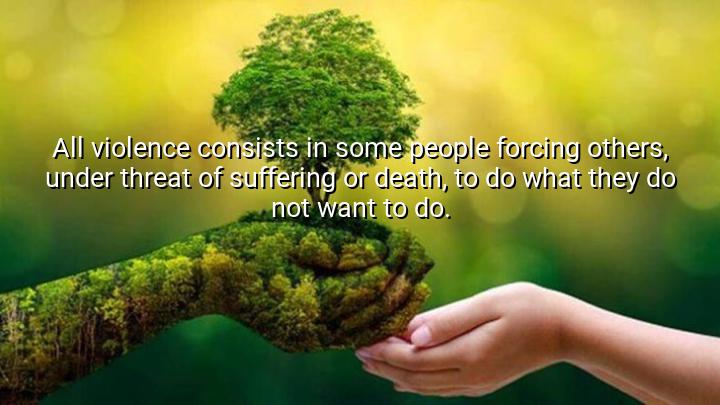




The quote, "All violence consists in some people forcing others, under threat of suffering or death, to do what they do not want to do," is from Leo Tolstoy, the Russian writer and philosopher known for his works on morality, nonviolence, and human rights. In this statement, Tolstoy defines violence as the act of coercing others into actions they would not willingly take, typically through the use of force or the threat of suffering or death. He points to the oppressive nature of violence, which strips individuals of their freedom and autonomy, forcing them to comply with the will of others.
Tolstoy’s quote reflects his deep belief in the importance of nonviolence and his advocacy for pacifism. He viewed violence not only in physical terms but also as the imposition of one person’s will upon another through fear or intimidation. This idea is central to his ethical philosophy, which emphasized the power of love, forgiveness, and peace as opposed to the destructive effects of force and conflict. He saw violence as a moral evil that could never justify the ends it sought to achieve.
The origin of the quote comes from Tolstoy’s writings on social justice, religion, and humanity, particularly his later works such as The Kingdom of God is Within You. This philosophical stance became more pronounced as he grew disillusioned with organized religion and the state's use of violence in enforcing power. His views on violence were influenced by his Christian beliefs, especially the teachings of Jesus, which emphasize peace, love, and turning the other cheek in the face of aggression.
Ultimately, Tolstoy’s quote serves as a critique of all forms of violence, urging a shift away from using force to achieve one's goals. He advocates for the respect of individual freedom and the power of peaceful resistance. By defining violence in this way, Tolstoy encourages a society that values consent and cooperation over coercion and fear.

AAdministratorAdministrator
Welcome, honored guests. Please leave a comment, we will respond soon