

Life is precious and there's not a lot of room for anger.
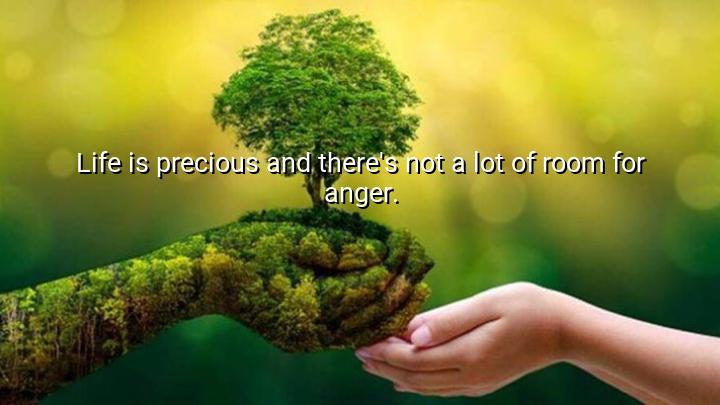




In this quote, Fran Drescher emphasizes the preciousness of life and suggests that there is little time to waste on anger. She acknowledges that life is short and valuable, urging people to focus on what truly matters rather than allowing negative emotions, like anger, to take up space in their lives. Drescher's statement serves as a reminder to prioritize joy, peace, and meaningful experiences over holding onto harmful emotions.
By recognizing that there is "not a lot of room for anger," Drescher highlights the idea that anger can be a disruptive force, taking away from the beauty and fulfillment life has to offer. She suggests that, instead of holding onto frustration or resentment, one should focus on living in a way that is aligned with personal growth, connection, and happiness. The message reflects an attitude of letting go of negativity to make room for more positive experiences.
The quote also speaks to the idea of emotional balance and the importance of maintaining a healthy perspective on life. When anger is allowed to dominate, it can cloud judgment and lead to unnecessary conflict or stress. Drescher's words encourage finding peace within oneself and the world around us, rather than letting anger take away the opportunities for growth and joy that life offers.
Ultimately, Drescher’s quote reflects a philosophy of mindfulness and emotional maturity, where the preciousness of life is recognized, and the choice is made to focus on love, gratitude, and understanding instead of dwelling in anger. It serves as a reminder that life is too short to be consumed by negative emotions, and that peace and happiness are the better alternatives.

L120- Le Nhat Linh 10A1-
I love the hopeful tone of this quote—it reminds me that we have a choice in how we react. But I can’t help but ask: what does ‘not a lot of room’ really mean? Should we feel guilty for feeling angry, or is it more about choosing not to dwell in it? I think it’s important to clarify whether this is about avoidance or emotional discipline, because they’re not the same.
HCHong Cam
This quote feels very calming, almost like a mantra for living more peacefully. But part of me wonders if it might sound dismissive to those dealing with deep pain. Is it fair to say there’s not room for anger when someone’s been wronged or is grieving? Maybe the key is not rejecting anger outright, but deciding how much space we want to give it and for how long.
UGUser Google
Reading this made me pause—how often do we let anger take up emotional space that could be used for something beautiful? But then again, isn’t it okay to feel angry sometimes, especially when things matter deeply? I’m torn. Should we strive to minimize anger at all costs, or accept it as a valid part of life that teaches us something about ourselves and our values?
THVo Thanh Huy
There’s a kind of peaceful wisdom in this, but it also raises a question for me: is suppressing anger for the sake of a ‘precious’ life actually healthy? Sometimes I think anger can serve as a warning signal, showing us where boundaries have been crossed. If we ignore it completely, do we risk silencing our needs or tolerating behavior that shouldn’t be accepted?
DNThanh Dat Nguyen
I appreciate the sentiment here—it feels like a gentle reminder to prioritize love and gratitude. Still, I’m curious how this perspective holds up in real-life challenges. What about people who live in high-conflict environments or deal with daily injustice? Can they realistically avoid anger? It makes me think: maybe the goal isn’t to eliminate anger, but to not let it take the driver’s seat in our lives.