

Let us be kind to one another and be slow to anger.
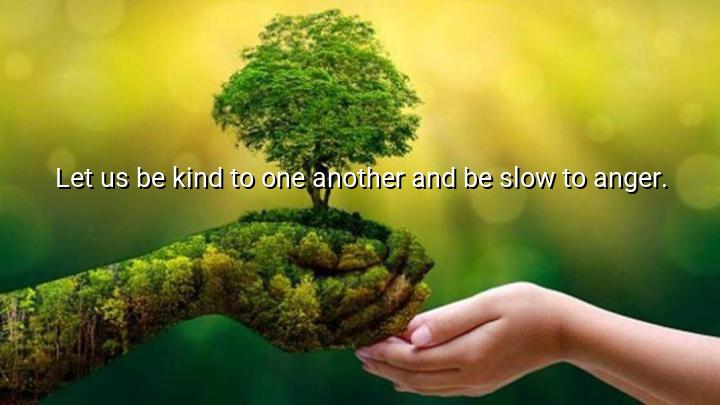




In this quote, Alaska emphasizes the importance of kindness and patience in human interactions, urging people to be "slow to anger." The message suggests that, rather than reacting impulsively with anger, we should strive to approach others with compassion and understanding. By advocating for kindness, Alaska highlights how positive, thoughtful behavior can foster healthier relationships and promote emotional well-being in both individuals and communities.
Alaska’s call to be "slow to anger" suggests a conscious effort to pause before responding to situations that might trigger frustration or irritation. In a world where immediate emotional reactions are often encouraged, the quote promotes the idea that taking a moment to reflect before reacting can lead to more peaceful and constructive outcomes. The notion of being kind implies that, by responding with empathy and consideration, we can diffuse conflict and build stronger, more supportive connections.
The origin of this quote likely comes from the idea that emotional regulation is key to personal growth and building positive social environments. It serves as a reminder that anger is a natural emotion, but how we manage and express it can deeply impact our relationships and overall happiness. Alaska’s wisdom advocates for a mindful approach to dealing with difficult emotions and situations.
Ultimately, this quote encourages us to practice self-control and empathy, rather than succumbing to the quick rush of anger. By being kind and deliberate in our responses, we create an atmosphere of understanding and peace, fostering more harmonious interactions and deeper connections with others. It’s a call for intentional emotional maturity in a world that often rushes toward conflict and division.

K9Nguyen khanh 9a5
I appreciate how this quote emphasizes kindness alongside controlling anger. Could this dual focus be a foundation for personal growth and societal change? How might schools, workplaces, and families integrate these values into their cultures? It would be interesting to discuss how kindness and patience contribute to resilience and conflict resolution.
NAQuan Nguyen Anh
This statement feels like a gentle reminder that kindness is a choice we can make in moments of irritation. How can we remind ourselves to choose kindness first, especially when anger feels justified? Are there particular habits or reflections that help in cultivating this attitude? Exploring the ripple effects of kindness in stressful situations might offer hope for more compassionate interactions.
QANguyen Quynh Anh
Alaska’s words bring to mind the importance of emotional regulation in maintaining healthy relationships. How do people learn to slow their anger without suppressing legitimate feelings? Is there a difference between being slow to anger and avoiding confrontation? It would be great to discuss tools like mindfulness or communication techniques that support this balance.
ANAnh Nhat
The appeal to kindness and restraint in anger is timeless, yet difficult. Could encouraging kindness reduce the cycle of reactive anger we often see in social media and public discourse? How might communities foster environments where people feel supported in practicing patience? I’d love to explore how kindness impacts not just individual relationships but broader social cohesion.
TTThanh Truc
This quote resonates as a call for empathy and self-control. But I wonder, what are the challenges people face in actually being slow to anger, especially when provoked or hurt? Does slowing anger down require ongoing practice or certain mindset shifts? I’m curious about how different cultures or philosophies approach the balance between kindness and assertiveness.