

It's clever, but is it Art?
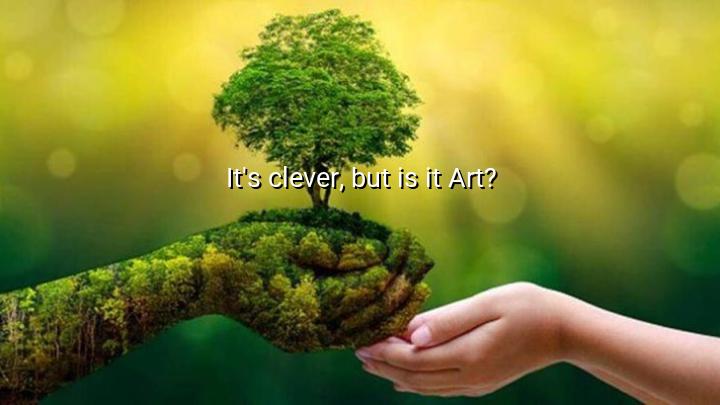




The quote "It's clever, but is it Art?" by Rudyard Kipling raises a fundamental question about the distinction between cleverness and true art. Kipling is challenging the idea that technical skill or wit alone qualifies as art. While something may be intellectually sharp or impressive, it does not necessarily make it meaningful or profound in the way art is traditionally understood. Art requires not only skill but depth, emotional resonance, and a connection to something larger than the creation itself.
In this context, Kipling is highlighting that art goes beyond surface-level brilliance or clever tricks. True art involves emotional expression, cultural significance, or a deeper commentary on the human experience. Cleverness may impress with its ingenuity, but without the depth and impact associated with art, it falls short of creating lasting or meaningful impressions. The quote invites reflection on what we value as art and challenges us to look for something more substantial than mere cleverness in creative works.
The origin of this quote comes from Kipling’s sharp wit and his critical perspective on various forms of art and culture. Known for his storytelling and poetry, Kipling often expressed opinions on human nature, the complexities of society, and the value of meaningful artistic expression. This quote reflects his belief in the need for art to have deeper significance rather than being driven by superficial charm or intellectualism.
By asking, "Is it Art?" Kipling calls attention to the need for a more discerning approach to creativity. It’s a reminder that art must transcend mere cleverness and technical proficiency; it must speak to something beyond the individual and resonate with audiences in a deeper, more lasting way. The quote encourages us to think critically about what makes something truly art rather than simply admiring it for its surface appeal.

HPHuy Phung
What intrigues me most about this quote is the tension between intellect and emotion. 'Clever' suggests a work that’s smart, maybe even subversive. But 'art' seems to demand more—perhaps beauty, feeling, or originality. So what’s the line between design, satire, and true artistic expression? Can something be both brilliant and soulless? This one-line quote has me spiraling into so many questions about aesthetic value and subjective judgment.
HNNguyen Hanh Nhan
This quote makes me think about the role of craftsmanship in art. Can something be cleverly conceived but lack depth or substance? I often see viral artworks or gimmicky installations that make a splash but seem empty beyond the novelty. Is Kipling pointing out that cleverness might be surface-level charm, whereas art is supposed to touch something deeper or more enduring in us? It’s definitely a worthwhile distinction to explore.
ZTZinn Thienn
I love the cheekiness of this question—it captures that moment when someone encounters something innovative and isn’t sure whether to praise it or laugh at it. But it also reveals how subjective our definitions of art really are. Can something be purely cerebral and still be art? Or is the emotional resonance what ultimately distinguishes clever design from artistic expression? I’d love to hear what others think about that line.
TCTa Thuy Cham
Honestly, this quote comes off as a bit dismissive—like a subtle jab at art that challenges tradition or refuses easy interpretation. But maybe that’s the point. Does something need to be emotionally moving or technically masterful to be considered art? I wonder how Kipling would view digital memes or AI-generated paintings. Is art about intent, skill, impact, or something else entirely? Where does cleverness fit into that hierarchy?
TCT.D. Canh
This quote instantly reminds me of modern conceptual art. So often, I find myself admiring the wit or innovation behind a piece, but then I hesitate—does cleverness automatically equal artistic merit? I think Kipling taps into a timeless debate here. Maybe the better question is: should art always aspire to evoke emotion or beauty, or can intellectual playfulness alone qualify as enough to enter the realm of art?