

God could not be everywhere, and therefore he made mothers.
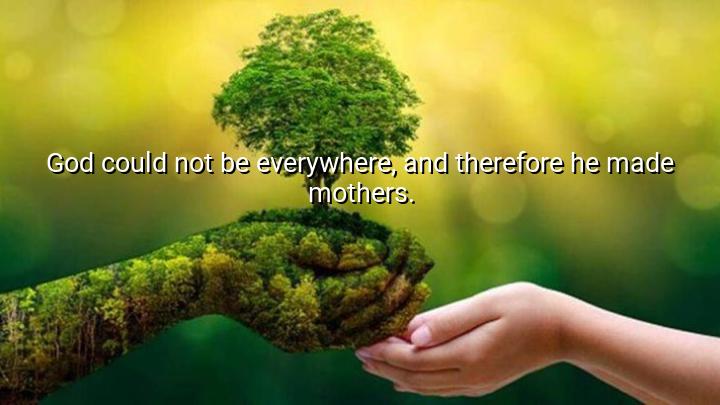




The quote " God could not be everywhere, and therefore he made mothers" by Rudyard Kipling reflects the deep reverence and appreciation for the unique role that mothers play in the lives of children. Kipling, a renowned English author and poet, suggests that mothers are divinely chosen to fulfill a role that provides comfort, love, and guidance in ways that go beyond the reach of God Himself. The quote humorously and affectionately implies that mothers are the earthly embodiment of God’s care and nurturing, filling the spaces where His omnipresence might not be physically felt.
The origin of this quote lies in Kipling’s broader perspective on the role of mothers within the family and society. Known for his works that often touched upon themes of life, nature, and duty, Kipling held mothers in high regard, recognizing their vital contributions to shaping the next generation. The statement emphasizes the significance of the maternal role, not just in a biological sense but also in an emotional and spiritual one, where a mother’s love and support mirror the compassionate nature of God.
In this context, Kipling is highlighting the importance of the maternal figure as a constant and reliable source of love, care, and guidance. While God is infinite and beyond the human understanding of presence, mothers embody this nurturing presence on a tangible level, offering support and understanding that is often unmatched. The quote elevates the role of the mother to something divine, recognizing that her influence is central to the development of her children and, by extension, society as a whole.
Ultimately, Kipling’s quote is a tribute to the immense value and power of mothers. It emphasizes that while God may not be physically present everywhere, He has imbued mothers with the ability to nurture and care in His place. This connection between God and mothers reinforces the idea that love, care, and guidance are essential for human development and are provided in abundance through the presence of a mother.

AAdministratorAdministrator
Welcome, honored guests. Please leave a comment, we will respond soon