

Is there any pleasure in anger? Yes, if the fire of my anger appeases the ashes of my friends.
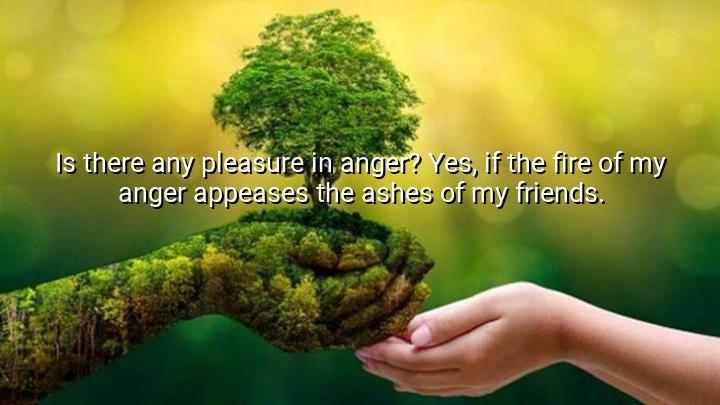




In this quote, Virgil reflects on the complex nature of anger and its potential to serve a purpose. He acknowledges that there can be a pleasure or sense of satisfaction in anger, but only if that anger results in appeasing or benefiting others, particularly friends. The phrase “the fire of my anger” metaphorically represents the intense emotional energy that can arise from anger, while the "ashes of my friends" suggests that the anger might help resolve lingering issues or provide a form of closure for those close to him.
Virgil’s statement implies that anger is not inherently negative—it can have a constructive role when used appropriately, such as resolving conflicts or addressing injustices. The pleasure he refers to comes from the idea that anger, when directed in a productive way, can restore balance or bring about a positive outcome, such as healing or resolution between people. This idea reflects a more nuanced view of anger, seeing it as a tool for restoration rather than mere destruction.
The origin of this quote comes from Virgil’s epic work, the Aeneid, in which themes of duty, emotion, and personal struggle are central. Throughout the Aeneid, Virgil explores the complexities of human emotions like anger, particularly in the context of war and personal relationships. The quote reflects Virgil's recognition that emotions, even intense ones like anger, can have layers of meaning and potential utility, depending on how they are channeled.
Ultimately, Virgil’s quote suggests that while anger is often viewed negatively, it can have a purposeful role in resolving tensions and bringing about understanding. The key lies in how one chooses to channel anger—whether it results in destructive actions or, instead, serves as a means to resolve conflict and heal emotional wounds.

DDDuck Duck
This quote makes me uncomfortable, but also curious—can anger ever be a moral response? If someone you loved was wronged or killed, wouldn’t it feel wrong *not* to burn with rage? But then, where do we draw the line between loyalty and obsession? This raises a bigger question: can a desire for justice ever be clean and righteous when it’s driven by personal loss?
PLPhuoc Loc
Virgil’s words feel like they belong in a battlefield epic, where emotions are raw and justice is personal. But in today’s world, is there still space for this kind of righteous anger, or would it be seen as regressive or even toxic? I wonder if this kind of sentiment explains some of the cycles of vengeance we see globally—grief fueling perpetual conflict. Is there a way to honor the dead without feeding the fire?
TNThao Nguyen
I find this quote haunting. It makes me think of how grief can morph into fury when there’s no outlet for sorrow. But is it fair to place the burden of our emotional resolution on an act of retaliation? Does seeking 'pleasure' in that kind of anger say more about our need for control than about honoring the ones we’ve lost? I’m conflicted between understanding it and fearing what it implies.
ONKim Oanh Nguyen
Is it dangerous to romanticize anger when it’s tied to loss and grief? This quote is powerful, but I worry it might suggest that revenge is noble or healing. Can justice or honor ever truly be found through rage, even if it’s for someone we loved? Or is that just an illusion we cling to when we’re too broken to feel anything else?
LPLinh Phuong
This quote stirs something primal in me. It’s as if Virgil is giving voice to that ancient, almost sacred urge for vengeance in the name of loyalty or love. But is that kind of pleasure truly satisfying—or just a temporary balm that deepens the wound? I wonder if appeasing the dead through anger ever brings peace to the living. Or does it just keep the pain alive under a different name?