

Indulge not thyself in the passion of anger; it is whetting a sword to wound thine own breast, or murder thy friend.
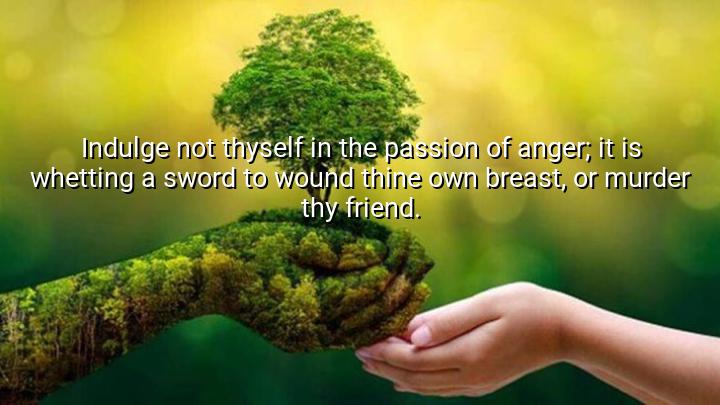




In this quote, Akhenaton, an ancient Egyptian pharaoh and philosopher, warns against indulging in the passion of anger, as it can lead to self-destruction or harm to others. He compares anger to whetting a sword, sharpening it for self-inflicted harm. The metaphor suggests that when we allow ourselves to be consumed by anger, we are essentially preparing to hurt ourselves or those we care about, much like sharpening a weapon to turn it against our own heart or to betray a friend.
Akhenaton’s message highlights the destructive nature of anger, not only in the immediate moment but in its long-term consequences. Anger can cloud judgment and lead to rash actions that cause regret. By indulging in anger, we give it power over us, allowing it to damage our relationships, our mental peace, and even our health. The act of indulging in anger is not just harmful to the moment but has lasting repercussions that can tear us apart emotionally and socially.
The origin of this quote is rooted in Akhenaton's broader philosophical and spiritual beliefs. As a leader who is often seen as a progressive and spiritual figure, he recognized that emotions, particularly anger, should be controlled and channeled in a way that serves peace rather than violence. His wisdom reflects the ancient understanding of the importance of self-mastery and emotional regulation for leading a balanced and harmonious life.
Ultimately, Akhenaton's quote serves as a timeless reminder of the danger of uncontrolled emotions like anger. It urges us to be mindful of the consequences of giving in to such destructive feelings, encouraging self-reflection and peace instead of rash reactions. By avoiding anger’s grip, we protect both ourselves and our relationships from unnecessary harm.

HANguyen Ha Anh
The metaphor of anger as a sword is striking. It invites me to think about how we sometimes unintentionally harm those closest to us when angry. Does this mean anger is inherently selfish, or is it a natural human response that needs careful management? How can we cultivate awareness so that our passions don’t end up causing the very damage we fear? I’m interested in approaches to mindfulness that might help here.
ANKieu Anh Nguyen
This quote suggests that anger is like a double-edged sword—dangerous for both the wielder and the victim. I wonder how many conflicts could be avoided if people recognized this earlier. But is it easy to ‘not indulge’ in anger when it feels so justified? What role does empathy play in tempering anger, and can understanding someone else’s perspective help prevent that self-inflicted wound?
TNHo Nguyen Thien Nhan
I find the warning in this quote both timeless and relevant. But what about moments when anger feels necessary for setting boundaries or seeking justice? Could suppressing anger entirely be harmful too? How do we strike a balance between avoiding self-harm through anger and expressing emotions honestly? It raises important questions about emotional regulation and the consequences of unchecked passion.
PVNgo phuong vy
The imagery here is powerful—the idea of anger sharpening a sword that harms both oneself and a friend. It makes me wonder about the dual nature of anger: can it ever be truly justified if it risks destroying relationships? How do we differentiate between anger that protects us and anger that destroys? I’d like to explore strategies for transforming anger into something less dangerous and more constructive.
DPDong Phan
This quote makes me reflect deeply on how anger can be self-destructive as much as harmful to others. Is it possible that when we nurture anger, we’re really hurting ourselves more than the intended target? How often do we overlook the internal damage caused by holding onto resentment? I’m curious how people manage to forgive or let go of anger before it metaphorically ‘wounds their own breast.’