

In the big picture, architecture is the art and science of making sure that our cities and buildings fit with the way we want to live our lives.
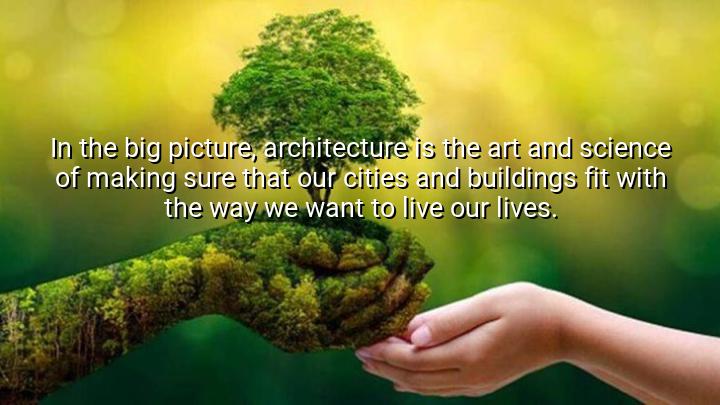




The quote "In the big picture, architecture is the art and science of making sure that our cities and buildings fit with the way we want to live our lives" by Bjarke Ingels underscores the fundamental role that architecture plays in shaping the environments in which we live. Ingels, a renowned Danish architect known for his innovative and sustainable designs, emphasizes that architecture is not just about creating aesthetically pleasing structures but about ensuring that buildings and cities align with the needs and aspirations of the people who inhabit them.
By describing architecture as both an art and a science, Ingels acknowledges that the field requires a balance of creativity and technical knowledge. The art of architecture involves designing spaces that are visually appealing and meaningful, while the science focuses on the practical aspects, such as functionality, sustainability, and safety. Together, these elements work to create spaces that support and enhance the way we live, interact, and function in our everyday lives.
Ingels also points out that architecture should be a reflection of how people want to live, suggesting that it is not a static process but one that is constantly evolving with society's needs and desires. The design of cities and buildings impacts how we experience life, from the layout of public spaces to the comfort and utility of private homes. As societies change, so too should the architecture that supports them, ensuring that it remains relevant and conducive to the way people live and work.
In essence, Ingels’ quote highlights the dynamic and interconnected nature of architecture. It is a discipline that blends artistic vision with scientific practicality to create environments that foster a high quality of life. The built environment is not just about structures; it is about shaping the ways in which people experience and engage with their surroundings, making architecture a key driver in how we live our lives.

HLTran Ha Linh
I appreciate the human-centered view of architecture in this quote. But I also wonder how much of our current environment was actually shaped with people in mind. So many cities feel like they were built for cars or profit rather than well-being. If architecture is supposed to reflect how we want to live, then shouldn’t we see more emphasis on green spaces, walkability, and community hubs? It feels like we still have a long way to go.
NHLu Thi Ngoc Hoa
It’s interesting that Ingels emphasizes both art and science in architecture. That balance must be hard to achieve. A building can be beautiful, but if it’s not functional or sustainable, is it really good design? On the flip side, highly efficient structures can feel cold or impersonal. I wonder which architects today are best at integrating both aspects. Is there an ideal formula, or is it different for every context?
KNkhanh nguyen
This quote resonates with me because it links design with human experience. But it also makes me curious—what happens when different groups have conflicting ideas about how they want to live? For example, how do architects balance cultural diversity, accessibility, and affordability within one built environment? It sounds amazing in theory, but I imagine the execution must be incredibly complex. Does architecture have to compromise, or can it truly reflect everyone’s needs?
Llongtrapps
I find Ingels’ view so refreshing—it frames architecture as a living, evolving practice. But I wonder, is this philosophy actually applied in most cities? Urban planning often seems more reactive than visionary. Are we truly designing spaces to support happiness, community, and sustainability? Or are we still prioritizing cars and commercial interests over people? I’d love to see more public input in shaping our surroundings, like he seems to be advocating.
DQDung Quoc
This quote really made me think—how often do we consider the impact of architecture on our daily lives? I mean, we move through buildings constantly, but do we ever ask if they’re really serving us? Bjarke Ingels seems to be calling for intentional design that reflects human needs and values. But who decides how we want to live? Is architecture keeping up with our evolving lifestyles, or is it still stuck in outdated norms?