

If you're with a close friend, your anger may raise his blood pressure as well as your own, whereas loving feelings may lower blood pressure in both of you.
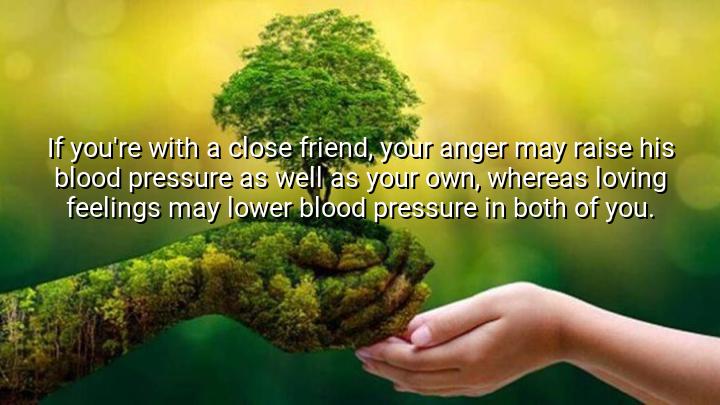




Dean Ornish's quote, "If you're with a close friend, your anger may raise his blood pressure as well as your own, whereas loving feelings may lower blood pressure in both of you," emphasizes the profound physiological effects that emotions, particularly anger and love, can have on both individuals in a close relationship. Ornish suggests that negative emotions like anger can not only harm your own well-being but can also have a detrimental impact on those around you. In contrast, positive emotions such as loving feelings can foster a healthier and more supportive environment, benefiting both people involved.
The origin of this idea is rooted in Ornish's research on the relationship between emotions and physical health, especially the effects of stress and positive emotions on the cardiovascular system. Ornish, a well-known physician and researcher, has long explored how lifestyle factors, including emotional health, affect overall well-being. His work suggests that stress and anger can trigger a physiological response in the body, raising blood pressure and contributing to long-term health issues, while positive emotions like love can have the opposite effect, promoting relaxation and reducing stress.
Ornish’s statement highlights the connection between emotional and physical health, showing how the emotional dynamics in close relationships can directly influence health outcomes. When individuals share anger or frustration, it creates a tense, stressful environment that negatively impacts blood pressure. However, when loving feelings prevail, it fosters a sense of calm and safety, leading to better physical health for both parties involved.
Ultimately, Ornish’s quote underscores the importance of cultivating positive, supportive relationships for both emotional and physical well-being. By recognizing the profound influence that emotions like anger and love have on our bodies, Ornish encourages us to be mindful of how we engage with others, particularly those closest to us. The choice to nurture loving feelings can not only improve emotional bonds but also promote better health for everyone involved.

QNQuynh Nhu
I’m interested in how this interplay of emotions and physical health might change over time. Are these effects stronger during certain stages of friendship or life circumstances? Also, how do cultural differences impact the way emotions are shared and influence physiological responses in close relationships?
BCNguyen Ngoc Bao Chau
The concept that anger can physically affect a friend’s health seems both powerful and concerning. Does this mean that toxic relationships can have direct health consequences? It raises questions about the importance of surrounding oneself with positive influences and how emotional contagion works in close bonds.
BNPham Hoang Bao Ngan
This quote makes me reflect on the responsibility we have to manage our emotions not only for our own well-being but also for those around us. How might this influence conflict resolution strategies in friendships? Could cultivating loving feelings intentionally be a practical tool to improve both emotional and physical health collectively?
HTHuyen Trang
I’m curious about the scientific basis for this claim. How strong is the evidence linking emotional states like anger or love to measurable changes in blood pressure between close friends? Also, does this effect extend beyond friends to family members or colleagues? Understanding these dynamics could have huge implications for stress management and healthcare.
DRDimension Ro
This idea is fascinating because it highlights how deeply connected we are with those we care about, even physiologically. I wonder how much of our health is influenced by the emotional states of the people around us, especially close friends or family. Could this mean that managing our emotions is not just personal but also a way to care for others? It makes me think about the importance of emotional awareness in relationships.