

I woke up one day, and for some reason all the hate and anger was gone.
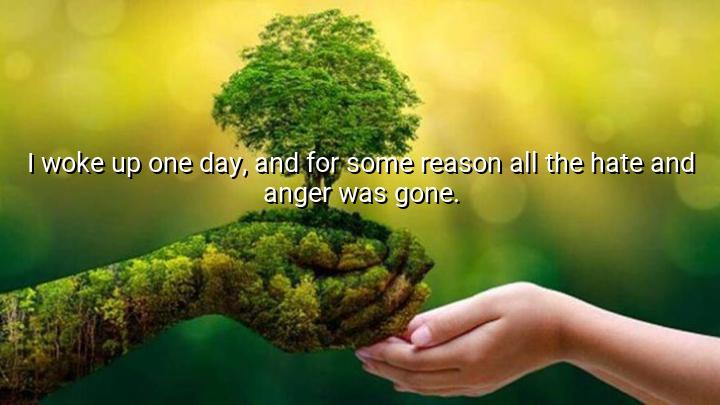




In this quote, Ronnie Radke reflects on a personal transformation in which he suddenly experiences the absence of hate and anger. He describes waking up one day to find that the intense emotions that once consumed him were no longer present. This shift represents a moment of emotional release or enlightenment, suggesting that anger and hate are not permanent states but emotions that can eventually fade with time or through a process of self-reflection and healing.
Radke’s statement highlights the possibility of emotional growth and change. It suggests that even deeply ingrained negative emotions, like anger and hatred, can eventually be overcome. His realization points to the power of inner peace and personal transformation, where letting go of such emotions leads to a sense of freedom and emotional clarity. This is a powerful reminder that it is possible to find peace even after periods of emotional turmoil.
The origin of this perspective likely comes from Radke’s own experiences in the music industry, where he has faced personal struggles and challenges. As the lead singer of Falling in Reverse, his lyrics often reflect themes of anger, frustration, and self-discovery. Radke has publicly spoken about the difficulties in his personal life and his journey toward overcoming negative emotions, making this quote a reflection of his growth and healing process.
Ultimately, Radke’s quote serves as a reminder that emotional burdens like anger and hate do not have to define us. It suggests that through introspection and personal change, it’s possible to let go of these emotions and move toward a place of peace and emotional balance, offering hope for anyone struggling with similar feelings.

KLNeang Kim Lien
I wonder if the disappearance of hate and anger is linked to a change in perspective or circumstances. Does this mean the person found closure or understanding? How do external events versus internal growth contribute to such emotional changes? It would be insightful to discuss the balance between life experiences and inner work in achieving emotional freedom.
NSDoan Ngoc Son
This quote suggests a moment of profound peace that many might strive for but few achieve suddenly. How do we prepare ourselves mentally and emotionally for such a shift? Could this be related to forgiveness or acceptance? I’d like to explore how people can cultivate conditions that make such transformative moments more likely.
DKThi Dung Kim
I’m curious if this experience of losing hate and anger suddenly is sustainable. Does it require ongoing work to maintain that emotional peace, or can it last naturally? Also, what happens if the source of anger or hate resurfaces later? This makes me think about the complexities of emotional change and whether it’s ever truly permanent.
CLCute:33 Lynh
This statement brings up questions about emotional resilience and healing. Did the person do something specific to let go of anger, or was it an unexpected breakthrough? How do people cope when they suddenly lose emotions that once defined them? I’m interested in hearing perspectives on how such moments affect identity and relationships going forward.
KLTran Khanh Linh
I find this quote both inspiring and mysterious. How does one wake up one day completely free from hate and anger without a clear reason? Is it possible that the mind just reaches a tipping point where negative emotions no longer hold power? I’d love to know more about the journey that leads to this moment and whether it requires conscious effort or happens spontaneously.