

I was very sensitive, so when sensitivity has no place to go, it's often turned into anger or frustration.
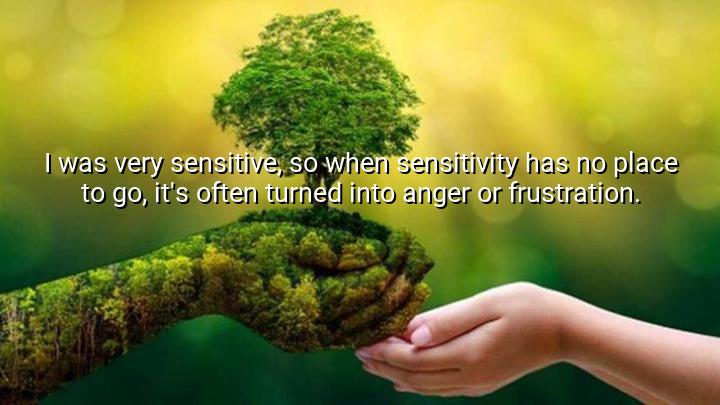




Sam Levinson’s quote explores the connection between sensitivity and its potential transformation into anger or frustration. Levinson reflects on how, as a sensitive person, emotions can become overwhelming when there is no appropriate outlet for them. Sensitivity allows individuals to deeply feel the world around them, but when those emotions aren't addressed or expressed in healthy ways, they can turn into negative feelings like anger or frustration. The quote speaks to the idea that intense emotional awareness, when unacknowledged or misunderstood, can lead to internalized pressure and emotional turmoil.
Levinson suggests that when sensitive individuals do not have the space or means to process their emotions, they may redirect them into anger or frustration. These emotions can serve as a form of self-protection, a way of coping with overwhelming feelings that have nowhere to go. Instead of being able to express vulnerability or emotional pain in a constructive manner, the person might feel compelled to react defensively or aggressively.
The quote sheds light on the emotional struggles of highly sensitive people and the potential difficulty they face in managing their feelings. While sensitivity can be a strength, enabling deeper empathy and understanding, it can also leave someone feeling isolated or misunderstood, leading to feelings of helplessness and eventually anger. The frustration that stems from this lack of expression or support is often misdirected, complicating the emotional landscape even further.
Ultimately, Levinson’s quote points to the importance of emotional expression and self-awareness for those who are sensitive. It suggests that finding healthy ways to process and express emotions is crucial for emotional well-being. Without these outlets, anger and frustration can dominate, preventing a sensitive person from finding peace and balance.

TDThaoNgoc7C Duong
Levinson’s observation encourages reflection on the origins of anger in many cases. Could recognizing sensitivity as the root of frustration help shift how we respond to anger in ourselves and others? How might this understanding improve communication and reduce misunderstandings? It’s inspiring to think that by embracing sensitivity, we can foster greater empathy and emotional harmony.
BBenlinh2009
This quote resonates with the idea that emotional bottling leads to explosive reactions. How can friends, family, and communities create safe spaces for sensitive individuals to share their feelings openly? Does society’s fast-paced, toughened-up culture make it harder for sensitivity to find expression? I’d love to hear personal stories or advice on balancing sensitivity with emotional resilience.
TThuynh tan tai
I find it interesting that sensitivity can be a double-edged sword—offering depth but also vulnerability to anger when unexpressed. What are some creative or therapeutic outlets that help sensitive people channel their emotions constructively? Could art, writing, or mindfulness be effective in preventing frustration from escalating into anger? It’s important to explore ways to honor sensitivity in a healthy way.
NTnguyen tung
Levinson’s words highlight the importance of emotional validation. When sensitive feelings are ignored or dismissed, they may turn into anger that others perceive as aggression. How do we teach emotional literacy so that sensitivity is recognized and nurtured rather than repressed? This makes me think about the broader impact of unmet emotional needs on mental health and social dynamics.
BCBao Chi
This quote sheds light on the complex relationship between sensitivity and emotional expression. If sensitivity is misunderstood or suppressed, anger can emerge as a defense mechanism. How can environments like schools or workplaces better support sensitive people to prevent this buildup? I wonder if increased awareness of emotional needs could reduce conflicts caused by unaddressed frustration.