

I think that to acknowledge a new generation is to acknowledge some degree of obsolescence in yourself, and that is very hard to do and often comes with undeniable anger.
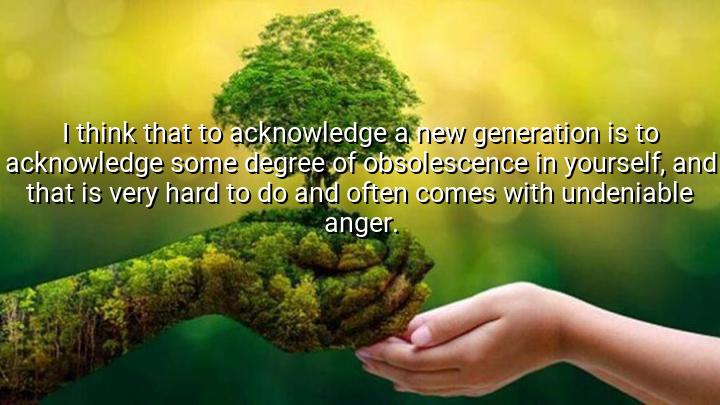




In this quote, Douglas Coupland explores the complex emotional experience of recognizing the emergence of a new generation, particularly in relation to one's own sense of obsolescence. He suggests that acknowledging the rise of younger generations often forces individuals to confront the reality that their own relevance or influence is diminishing. This recognition can stir feelings of frustration and anger, as it challenges one's identity and role in society.
Coupland highlights the inherent difficulty in accepting that one’s time has passed or that newer ideas, technologies, or cultural shifts are replacing older ones. The anger he references arises from this struggle with obsolescence, as it can be emotionally painful to realize that what you once represented may no longer hold the same significance. This reaction is natural, as it threatens one's sense of purpose and place in the world.
The quote also reflects a broader theme about generational transitions. Each generation inevitably becomes part of the past, and Coupland points to the emotional cost of that transition. By emphasizing the challenge of accepting change, the quote invites reflection on how society values or dismisses the contributions of older generations and the difficult process of accepting one's fading influence.
Ultimately, Coupland’s insight reveals how the passage of time and generational shifts can evoke a deep sense of loss and anger, especially when one feels disconnected from the future. It speaks to the emotional complexity of aging, societal change, and the inevitable realization that each generation must eventually make way for the next.

NLTran Nguyen Nhat Linh
It’s intriguing that anger accompanies the realization of becoming obsolete. Does this anger serve as a defense mechanism, or is it an expression of grief? How can understanding this emotional response help both individuals and organizations manage generational transitions more smoothly? This could lead to healthier conversations about aging and legacy.
HGHuong Giang
This quote highlights a universal challenge: letting go of past identities to make room for new ones. How might acknowledging obsolescence lead to growth rather than resentment? Are there cultural or personal practices that ease this acceptance? I’d be interested in hearing how people navigate this emotional complexity in real life.
TTLuc Thi Trinh
I’m curious about how this tension between generations affects society as a whole. Does the struggle with obsolescence hinder progress, or does it create valuable dialogue? How do individuals balance pride in their own contributions with openness to new ideas and perspectives? Exploring this balance could shed light on fostering mutual respect across age groups.
VOTran Thi Viet Oanh
The idea that acknowledging a new generation triggers anger because it implies personal obsolescence resonates deeply. Do you think this feeling is more common in certain fields or cultures where youth is highly valued? How might this impact mentoring and intergenerational collaboration? Discussing ways to transform this anger into productive energy could benefit both older and younger generations.
TAQuyen thi Thu An
This quote really captures the emotional difficulty of accepting change and generational shifts. How do you think people can reconcile the natural feeling of obsolescence with the need to support and embrace new generations? Is anger a necessary part of that process, or can it be overcome with acceptance and understanding? It would be interesting to explore strategies for making this transition healthier and less painful.