

I think that crying is a way women and men express frustration, anger, or passion. And we should not feel compelled to mute those emotions.
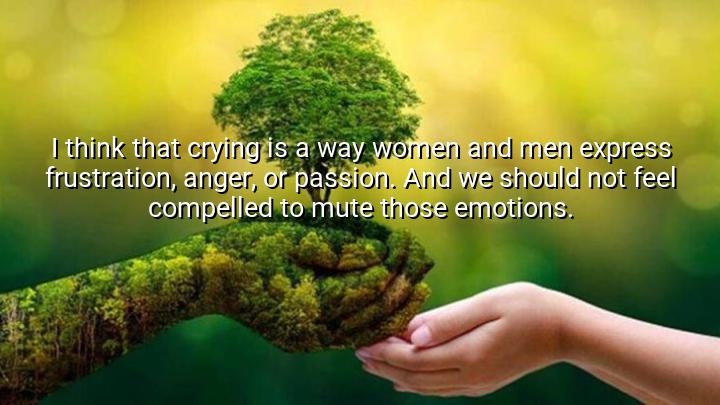




The quote "I think that crying is a way women and men express frustration, anger, or passion. And we should not feel compelled to mute those emotions," by Jennifer Palmieri, addresses the idea that crying is a natural and valid expression of emotion, regardless of gender. Palmieri, a political strategist and communications expert, suggests that crying is often misunderstood or stigmatized, especially in certain social contexts, but it serves as an important outlet for expressing a range of emotions, including frustration, anger, and passion.
In this quote, Palmieri challenges the cultural norms that often encourage individuals, particularly men, to suppress their emotions. While women are sometimes more socially accepted in expressing emotions like anger or frustration through crying, men are often expected to be stoic and unemotional. Palmieri argues against these constraints, asserting that both women and men should feel free to express their emotions openly without fear of judgment or being seen as weak. Crying, in this sense, becomes a tool for emotional release and self-expression.
The emphasis on not feeling compelled to mute emotions highlights the importance of emotional authenticity. Palmieri suggests that suppressing emotions, like crying, can lead to emotional harm or hinder personal well-being. By allowing oneself to fully express emotions, individuals can process and better understand their feelings, leading to healthier emotional expression and communication. This approach encourages a more open, empathetic way of dealing with personal struggles.
Ultimately, Palmieri's quote promotes emotional freedom and challenges societal expectations around gender and emotional expression. She advocates for the idea that crying, whether out of frustration, anger, or passion, is a human experience that should be accepted and not silenced. By embracing all emotions, people can lead more authentic, emotionally healthy lives.

CHNguyen canh hiep
Jennifer Palmieri’s insight invites us to rethink emotional norms. How might encouraging open expression of crying contribute to healing in communities dealing with trauma or injustice? Could it also challenge the idea that controlling emotions is synonymous with professionalism or maturity? There’s a lot to unpack about vulnerability and societal expectations here.
NANguyen An
This statement makes me wonder about the link between crying and other forms of emotional expression. Are there situations where crying can be misunderstood as weakness, and how can we change those perceptions? Could encouraging healthy emotional outlets help people process complex feelings like anger and passion more effectively?
NNngan nguyen
I appreciate that this quote recognizes crying as a shared human experience rather than a gendered one. How can workplaces, schools, and public spaces become more supportive environments where people feel safe to express emotions without judgment? Creating such spaces might foster empathy and reduce emotional isolation.
TMNguyen Bui Tra My
This quote challenges the stigma around crying and emotional expression. Are there cultural or gender differences in how crying is perceived? How might promoting acceptance of crying help break down harmful stereotypes about emotional control? I’m curious about the impact this shift could have on both personal well-being and social dynamics.
LPNguyen Le Phong
Jennifer Palmieri’s point about crying as a natural expression of frustration, anger, and passion resonates deeply. Why do you think society often pressures people, especially men, to suppress crying? How can embracing crying as a valid emotional release change our understanding of strength and vulnerability? It seems like encouraging open emotional expression could improve mental health and interpersonal relationships.