

I think that all the anger and cynicism comes from suppressing things that we always wanted.
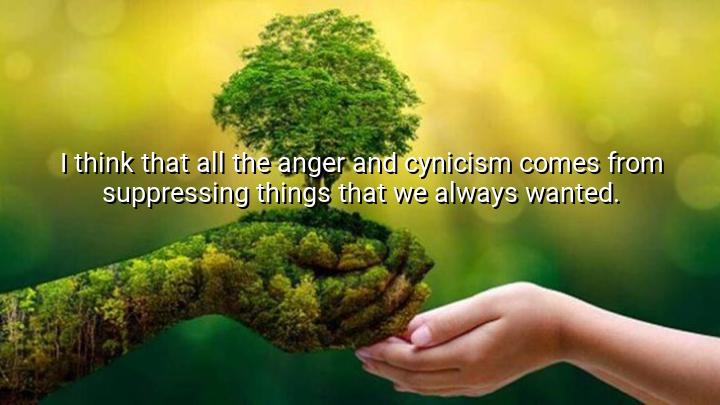




In this quote, John Lee Hancock explores the psychological roots of anger and cynicism, suggesting that these emotions often arise when individuals suppress their true desires and aspirations. Hancock believes that when people are unable or unwilling to pursue what they truly want in life—whether due to fear, societal pressures, or self-doubt—the resulting frustration manifests as anger. This suppression of desires, instead of being addressed, builds up over time, leading to a sense of bitterness or cynicism toward life and the world around them.
Hancock emphasizes that the source of this anger is not necessarily external forces but internal struggles. When we deny or ignore our deeper wants and dreams, the emotional energy that comes from those unmet desires doesn't disappear. Instead, it often transforms into anger and cynicism as a defense mechanism, protecting us from facing the vulnerability of unfulfilled wishes. These emotions then become a way of coping with or masking the pain of not living authentically.
The origin of this quote lies in Hancock’s perspective on human emotions and the psychological impact of suppression. As a filmmaker and storyteller, Hancock often explores deep themes of personal growth and the consequences of emotional repression. This quote reflects his broader exploration of how the human psyche responds to internal conflict, particularly when desires are denied or ignored.
Ultimately, Hancock’s statement suggests that anger and cynicism are not just random or unavoidable emotions—they are the byproducts of a deeper emotional struggle. By acknowledging and addressing suppressed desires, individuals can begin to release the negative emotions that stem from not pursuing their true wants, leading to a more fulfilled and authentic life.

TTThach Trieu
The connection between suppressed desires and anger suggests a call for self-compassion. How can individuals learn to recognize and honor their true wants without guilt? Could this awareness transform cynicism into hope or motivation? Hancock’s insight encourages us to explore the roots of our emotions and strive for authentic living.
AMAnh My
This quote also raises questions about cultural influences. In societies where expressing wants is discouraged, is anger more prevalent? How do different cultural norms around desire and restraint shape collective emotional landscapes? Exploring these themes could offer valuable perspectives on global emotional health and social cohesion.
HNThi Ha Nguyen
Hancock’s statement prompts me to think about how childhood experiences influence the suppression of desires and the development of anger. Are early lessons about what is ‘acceptable’ to want a source of long-term emotional conflict? Can therapy or creative outlets help uncover and address these suppressed needs? It highlights the importance of emotional honesty throughout life.
MLMy Loan
I’m intrigued by the link between suppression and cynicism. Could it be that people develop a defensive attitude when they feel their true desires are unattainable? How might this manifest in relationships or workplace dynamics? Understanding this might help us cultivate empathy for others’ frustrations and recognize our own emotional blocks.
PTPhuong Tram
This idea that suppressed wants lead to anger makes me wonder about the role of unmet expectations in emotional wellbeing. Is it always possible or even healthy to pursue every desire, or does managing wants play a part in maturity? How do people balance ambition with acceptance? Hancock’s quote invites reflection on the complexity of human motivation and emotional health.