

I feel like we sometimes let our emotions and anger get in the way.
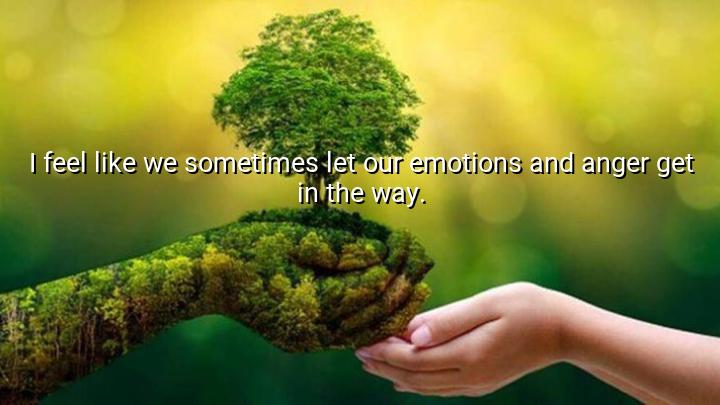




In this quote, Trevor Jackson expresses the idea that emotions, particularly anger, can sometimes cloud our judgment and interfere with our ability to think or act clearly. He suggests that, in moments of frustration or strong emotional response, we may make decisions or react in ways that are driven more by our feelings than by reason or logic. This insight reflects a common struggle where intense emotions, especially anger, can derail communication and problem-solving.
Jackson’s statement speaks to the human tendency to allow negative emotions to dictate behavior, rather than taking a step back and evaluating the situation more calmly. By acknowledging this, he highlights the importance of emotional control and self-awareness. This idea is often explored in the context of personal growth and emotional intelligence, where managing emotions can lead to better outcomes in both personal and professional settings.
The origin of this perspective likely stems from Jackson’s experiences navigating life’s challenges, possibly in his career or personal life, where he has witnessed or experienced firsthand how emotions can impact decision-making. This is a sentiment shared by many, as emotional regulation is a key component of mental and emotional well-being.
Ultimately, Jackson’s quote encourages self-reflection and emotional awareness. It reminds us of the importance of taking a moment to assess our emotions, particularly anger, before allowing them to influence our actions. By doing so, we can make more thoughtful decisions and maintain healthier relationships and outcomes.

XVXuan Vi
I wonder if there are tools or practices, like mindfulness or therapy, that can help individuals become more aware of when their emotions interfere. How accessible and effective are these resources for different people? It’s encouraging to consider that with effort, we can learn to not let anger obstruct our goals or relationships.
HHah
This perspective makes me think about the consequences of letting anger take control. How does it affect not just the individual but also those around them? Can suppressed anger be equally damaging as uncontrolled outbursts? Exploring these dynamics might help us develop healthier ways to process emotions.
UGUser Google
Reading this, I feel it highlights a universal struggle—knowing when emotions are justified but still harmful if unchecked. How do people differentiate between feeling anger as a signal and letting it become a destructive force? Are there cultural or individual differences in how people manage this balance?
PALa Phuong An
I’m curious about the contexts in which emotions and anger become obstacles. Is it more common in personal relationships, professional settings, or broader social issues? How can we balance expressing genuine feelings without letting them derail important conversations or progress? This quote invites reflection on emotional regulation and communication.
TDNguyen tien dat
This quote resonates with me because it acknowledges how powerful emotions like anger can sometimes cloud our judgment. I wonder how often people are aware that their emotions are interfering with their decisions. What strategies can we use to recognize when anger is getting in the way and redirect it constructively? It seems like emotional self-awareness is a crucial skill for both personal growth and healthy relationships.