

I don't think your ability to fight has anything to do with how big you are. It's to do with how much anger is in you.
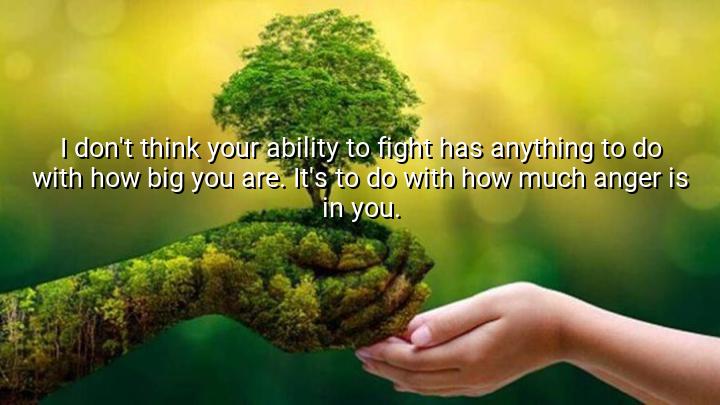




In this quote, Amy Winehouse reflects on the idea that physical size or strength is not the defining factor in one’s ability to fight. Instead, she argues that the true measure of a person’s ability to confront challenges, or even engage in conflict, lies in the amount of anger they carry within them. Winehouse suggests that anger can provide the drive and determination needed to face difficulties or confront adversaries, regardless of physical stature.
Winehouse’s perspective challenges the common belief that physical strength is the key to overcoming obstacles or fighting back in tough situations. She highlights the emotional power of anger, suggesting that it is this internal drive—rather than sheer physical power—that truly determines one’s capacity to stand up for oneself. The intensity of anger can often fuel people to push through adversity, even when they may not have the physical tools to do so.
The origin of this perspective comes from Winehouse’s own life experiences, particularly her struggles with emotions, relationships, and self-expression. Known for her emotionally charged music, Winehouse often channeled her anger, pain, and frustration into her art. This quote reflects her personal understanding of the power of emotion in driving action, even when external factors like strength or size may seem limiting.
Ultimately, Winehouse’s quote serves as a reminder that anger—when harnessed properly—can be a powerful source of inner strength and motivation. It suggests that emotional intensity can be more impactful than physical might, allowing individuals to confront their challenges with determination and resolve.

TTsksj
The idea that anger drives fighting ability challenges stereotypes about strength and size. Does this mean that someone smaller but angrier can overcome bigger opponents? How do personal experiences of injustice or frustration feed into this kind of anger? I’d like to discuss how emotional experiences shape physical performance and confidence.
HSHoan Sang
This quote makes me think about how emotions like anger can provide a sudden burst of energy or courage. But how sustainable is that energy? Can relying on anger for strength lead to burnout or injury? I’m interested in how athletes or fighters balance emotional intensity with physical endurance and mental focus.
EFf efeqF f
Amy Winehouse’s perspective feels raw and authentic, but I worry about glorifying anger as a source of power. Could this mindset encourage aggression or violence? How can people recognize when anger is helpful versus harmful? I’d like to explore how emotional intelligence helps manage anger so it enhances rather than undermines one’s abilities.
TTVu Thi Thanh Thuy
While the quote emphasizes anger’s role in fighting ability, I question whether anger alone is enough. What about skills, strategy, or training? Can anger compensate for lack of experience or preparation? I’m curious how different cultures or philosophies view the connection between emotion and physical strength, especially in martial arts or self-defense.
ATNguyen Ngoc Anh Thu
This statement highlights the power of inner emotions over outward appearances. I wonder if this applies beyond physical fights—does anger also influence mental resilience or determination? How do people channel anger constructively without letting it consume them? I’d be interested in learning about techniques for harnessing anger as a motivator rather than a destructive force.