

I don't like anybody to be angry with me. I'd rather have friends.
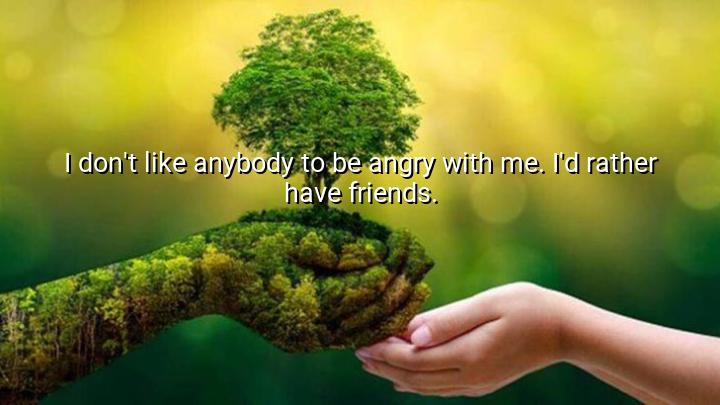




In this quote, B. B. King expresses his desire to maintain positive relationships with others, stating that he doesn’t like anyone to be angry with him. King’s preference for friendship over conflict suggests a deep appreciation for harmony and connection. The quote emphasizes his inclination to resolve issues in a way that keeps people on his side, valuing mutual respect and goodwill over discord.
King’s words reflect a broader belief in the power of relationships and the importance of avoiding negative emotions, such as anger, that can create distance between people. His statement reveals a desire for peace and understanding, preferring to foster supportive and caring connections rather than dealing with the tension and negativity that often accompany anger or conflict.
The choice to value friends over having others upset with him speaks to King’s character as someone who sought to build bridges rather than walls. It aligns with his philosophy of fostering trust and respect in both personal and professional relationships, ensuring that the people around him felt valued and appreciated.
Ultimately, King’s quote serves as a reminder of the importance of maintaining positive connections with others and the emotional benefits of prioritizing friendship over the potential strain of unresolved anger. It encourages individuals to seek harmony and avoid situations where anger and animosity can interfere with meaningful relationships.

LGDuong Nu Lam Giang
This quote makes me think about the emotional labor involved in maintaining friendships. Is it possible that some people work harder to avoid making others angry than others? How might this affect the authenticity of relationships? It also raises the question of how friends handle inevitable conflicts and whether the fear of anger limits deeper connection.
HKnguyen hoang khang
I find this quote comforting, as it shows a gentle approach to relationships. However, I wonder if it also implies a risk of people-pleasing. How do we ensure that the desire to avoid anger doesn’t lead to losing oneself or compromising boundaries? It opens up a conversation about balancing empathy with self-respect in friendships.
TADao Tuan Anh
Reading this quote, I’m reminded of how fear of rejection can shape our interactions. Is the aversion to anger more about avoiding discomfort or protecting the relationship? How do we cultivate friendships where anger or disagreement is seen as a natural part of growth rather than a threat? It seems like a call for both kindness and courage in relationships.
TTan
This statement highlights a natural human desire for acceptance and connection. Does this mean that we often prioritize social approval over personal expression? How do you think people navigate situations where being honest might risk angering friends? It makes me curious about the ways different cultures view conflict and friendship, and whether this preference for harmony is universal.
HMPham Ha My
I appreciate the sentiment here because it shows a preference for peace over conflict. But I also question whether avoiding anger at all costs might lead to suppressing important emotions. Can a friendship truly thrive if disagreements are hidden or avoided? It raises questions about how we handle conflict and the role of vulnerability in building strong, authentic connections.