

Hurt leads to bitterness, bitterness to anger, travel too far that road and the way is lost.
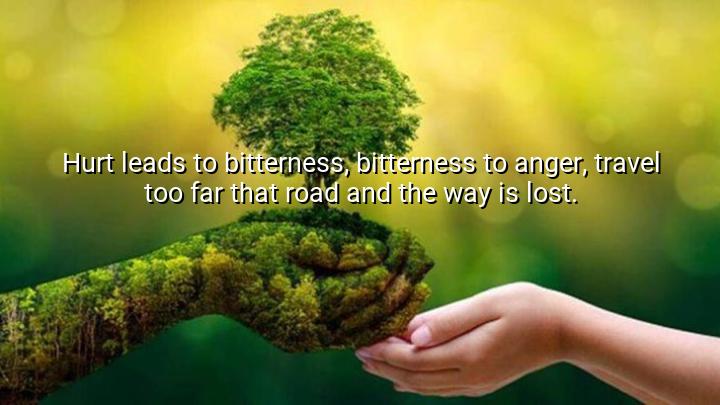




In this quote, Terry Brooks explores the emotional progression that often begins with hurt and leads to increasingly destructive emotions. He suggests that hurt, if not dealt with properly, can evolve into bitterness, which then turns into anger. This emotional path, according to Brooks, can ultimately lead to a lost way, implying that if we continue down this road without addressing our feelings, we risk losing our sense of direction, peace, and well-being. The quote highlights the importance of confronting hurt early on to avoid the escalation of negative emotions.
Brooks’ statement emphasizes the progression of negative emotions. Hurt is often the starting point, a natural response to feeling wronged or wounded. However, if that hurt is not processed and healed, it can fester into bitterness, a lingering resentment that poisons our emotional state. Over time, bitterness can fuel anger, leading us to act out or become consumed by the very emotions that once began as a small wound. If this cycle is not broken, the path becomes harder to navigate, and we lose our way emotionally, making it more difficult to find peace or resolve the issue.
The origin of this quote comes from Terry Brooks’ broader exploration of human emotions in his works of fiction, particularly in the context of his epic fantasy series. In his stories, Brooks often delves into the psychological journeys of his characters, exploring themes of growth, conflict, and redemption. This quote encapsulates his belief that unchecked negative emotions can lead to destructive consequences, both personally and within larger contexts.
Ultimately, Brooks’ quote serves as a reminder that unresolved hurt can snowball into bitterness and anger, ultimately leading us down a path where peace and clarity become harder to attain. By addressing our emotions early on and seeking healing, we can avoid the emotional spiral that prevents us from moving forward in a healthy and constructive way.

YNTran Yen Nhi
This quote captures the danger of allowing negative emotions to dominate our inner world. I wonder about the role of resilience and personal choice in this process. Can someone choose to ‘not travel too far’ down this road, or are some people more predisposed to it due to past trauma? It’s a reminder of the importance of self-awareness and early intervention in emotional health.
QGQuynh Giang
The progression from hurt to bitterness and anger described here feels very relatable but also alarming. It makes me think about how often people get stuck in these emotions without realizing the long-term impact. What practical strategies can help break this cycle before it becomes overwhelming? And how might different life experiences shape one’s vulnerability to this emotional path?
HHiep
Reading this, I feel a sense of urgency about addressing emotional pain before it festers. But I also wonder, is some level of bitterness or anger necessary for growth or self-protection? How do we balance acknowledging our pain with the risk of losing our way? This quote challenges me to think about the delicate line between healthy and destructive emotions.
NANgoc Anh
This statement resonates with the idea that emotions aren’t isolated but interconnected. It makes me curious about the psychological mechanisms behind hurt transforming into bitterness and anger. Could mindfulness or emotional intelligence training help individuals avoid traveling too far down this road? Also, how might cultural differences influence how people process and express these feelings?
NA10CA1-03- Hoang Nam Anh
I find this quote quite sobering, as it warns about the consequences of unchecked emotions. It leads me to ask, how do people recover once they feel ‘lost’ on this road? Is it possible to retrace our steps back to peace, or does moving forward require a completely new mindset? What role do support systems like therapy or community play in helping someone navigate this path?