

Hatred, anger, and violence can destroy us: the politics of polarization is dangerous.
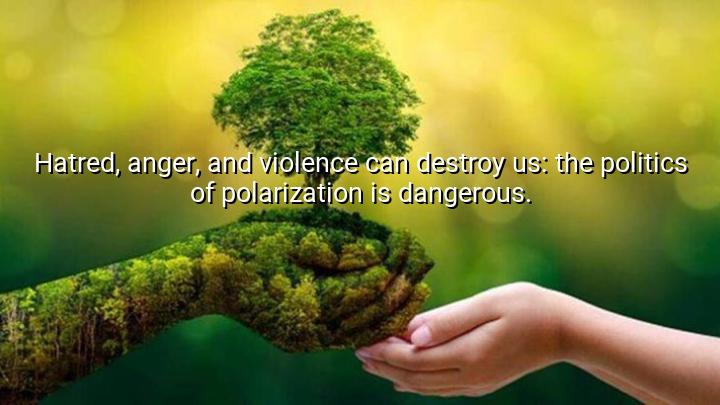




In this quote, Rahul Gandhi warns about the destructive power of hatred, anger, and violence, emphasizing that these emotions can ultimately destroy individuals and societies. Gandhi suggests that when these negative emotions take over, they can lead to a cycle of destruction that harms both personal well-being and societal harmony. He highlights that such emotions, when left unchecked, can tear communities apart, eroding trust and cooperation.
Gandhi also draws attention to the politics of polarization, which he sees as a dangerous force in contemporary society. Polarization refers to the division of people into opposing factions, often based on ideological or political differences. This kind of division fuels anger and hostility, preventing productive dialogue and mutual understanding. Gandhi warns that this kind of politics only exacerbates hatred and violence, making it harder to find common ground and work together for the greater good.
The origin of this perspective stems from Rahul Gandhi's experience as a political leader in India, where he has witnessed firsthand the divisive impact of extreme partisanship and political rivalry. His work, especially in advocating for unity and social harmony, underscores his belief that society must resist the forces of division and work toward greater inclusivity and peace.
Ultimately, Gandhi's quote serves as a powerful reminder of the dangers of letting anger, hatred, and violence dictate our actions, especially in politics. It calls for a more compassionate, cooperative approach to solving problems, where empathy and understanding take precedence over division and conflict.

GDGold D.dragon
The statement highlights the urgency of addressing political polarization before it causes irreversible harm. What strategies can individuals and groups use to resist the pull of hatred and anger? Does education play a role in cultivating critical thinking and emotional intelligence that counters polarization? This quote inspires reflection on personal responsibility in promoting peace.
ANAn Nguyen
This quote emphasizes the destructive power of negative emotions in politics. I wonder how leaders can foster an environment where disagreements lead to growth rather than destruction. Are there historical examples where polarized societies overcame such challenges? It’s hopeful to think that despite dangers, there are pathways to reconciliation and cooperation.
NHNguyen Nhat Ha
Reading this quote makes me think about the psychological effects of living in polarized environments. How do constant exposure to anger and hatred affect individual mental health and community wellbeing? Could addressing emotional divides be as important as political solutions in healing societies? It’s a complex problem that involves both policy and human connection.
TVAnh Tran Van
I find this statement deeply relevant in today’s global political climate where polarization seems rampant. How can societies promote respectful disagreement without descending into hatred and violence? Does this require systemic changes in political processes or more grassroots efforts? It also raises concerns about the long-term impact of division on democracy and social cohesion.
XPxinhxinhne plinh
This quote brings up a crucial issue about the dangers of polarization in politics. It makes me wonder how hatred and anger fuel divisiveness and hinder constructive dialogue. Are there effective ways to bridge polarized communities and reduce hostility? What role do media and leaders play in either escalating or calming tensions? It feels like a call for more empathy and unity in political discourse.