

Forgiveness is the economy of the heart... forgiveness saves the expense of anger, the cost of hatred, the waste of spirits.
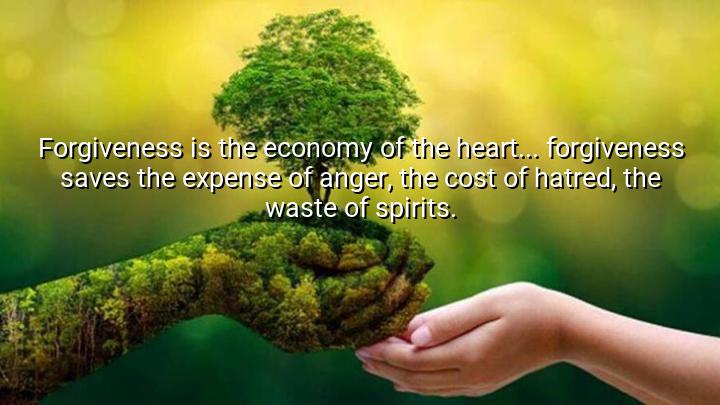




In this quote, Hannah More describes forgiveness as a form of economy for the heart, implying that it has the power to save us from emotional costs and burdens. By choosing to forgive, we avoid the negative effects of anger and hatred, which can drain our emotional energy and harm our well-being. Forgiveness, therefore, acts as a kind of spiritual investment, providing peace and emotional relief in return.
More emphasizes that holding onto negative emotions like anger and hatred comes at a high price, both mentally and emotionally. The "expense" of these feelings is not just personal discomfort, but a drain on one’s spirit and inner peace. On the other hand, forgiveness offers a more sustainable and healthier way of living, freeing us from emotional weight and creating space for healing.
The origin of this perspective comes from Hannah More's own advocacy for moral and emotional growth, particularly in her writings that promote self-reflection and compassionate living. As a social reformer and writer, More often focused on the importance of virtue and kindness, suggesting that forgiveness is not just a moral act, but a practical one that benefits both the individual and society.
Ultimately, forgiveness is framed as an act of wisdom and self-care, offering a way to preserve our emotional and spiritual energy. It allows us to move forward without being hindered by the corrosive effects of unresolved anger, highlighting its power to nurture our hearts and spirits.

TDTien Duc
This quote highlights forgiveness as a powerful antidote to destructive emotions. It makes me curious about how cultural or religious backgrounds influence people’s willingness to forgive. Are there societies where forgiveness is seen more as a practical necessity rather than a moral obligation? Understanding these differences might help foster more compassionate approaches to conflict.
NQNga Quynh
The metaphor of forgiveness as an economy is thought-provoking. It suggests that choosing forgiveness can be a strategic way to conserve emotional resources. I wonder how this idea applies in situations of repeated harm or trauma—can forgiveness still ‘save’ us, or does it require boundaries? It also makes me think about the process of forgiving and its challenges.
DPNguyen Dinh Phong
Reading this quote makes me reflect on the internal toll that anger and hatred take on us. Forgiveness, described as saving ‘the waste of spirits,’ suggests it’s a vital act of self-care. How might this perspective change how people approach conflict resolution? Could more emphasis on the personal benefits of forgiveness lead to healthier relationships and communities?
LTlien trieu
I find this analogy of forgiveness as an economy compelling because it highlights the tangible benefits of letting go. But I wonder, how do we balance forgiveness with justice? Can forgiving someone who has deeply hurt us sometimes feel like a loss or an unfair ‘cost’? This raises questions about the complexity of forgiveness and its role in healing.
TVNGUYEN THI THAO VY
This quote beautifully captures forgiveness as a form of emotional economy, saving us from the heavy costs of anger and hatred. It makes me wonder how often we overlook forgiveness as a practical tool for mental well-being, not just a moral virtue. Can reframing forgiveness this way motivate more people to practice it? Also, how might holding onto resentment affect our energy and overall happiness?