

For me music is a vehicle to bring our pain to the surface, getting it back to that humble and tender spot where, with luck, it can lose its anger and become compassion again.
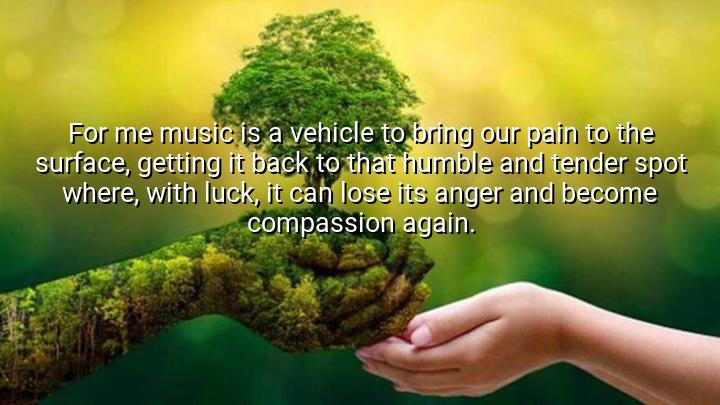




In this quote, Paula Cole expresses her belief that music serves as a powerful tool for expressing and processing emotional pain. She describes music as a vehicle that helps bring the pain to the surface, allowing it to be acknowledged and dealt with. The idea is that music creates a space where anger and other negative emotions can be externalized, making them easier to confront and transform.
Cole suggests that through this process of emotional expression, music can help return pain to its humble and tender origins. By confronting and expressing the rawness of pain, individuals may be able to move past anger and reach a place of compassion. For Cole, music is a conduit that transforms deep emotional hurt into something more healing and empathetic, enabling people to connect with their vulnerability and ultimately cultivate a sense of understanding and care.
The quote emphasizes the therapeutic and cathartic power of music in dealing with difficult emotions. It shows how music allows for emotional release and can lead to healing, turning the destructive force of anger into something more positive. This transformation highlights music's ability to provide not only an outlet for emotional expression but also a pathway toward personal growth and emotional maturity.
Ultimately, Cole’s words reflect her view of music as a deeply emotional and transformative experience. It is not just about entertainment, but about accessing and processing feelings in a way that helps people grow, heal, and connect with others through compassion. Music becomes a medium through which pain is not only expressed but ultimately transcended.

HHa
This really makes me appreciate the emotional responsibility artists carry. If music can transform pain into compassion, then musicians are doing far more than entertaining—they’re healing. But do they always realize that’s what they’re doing? I wonder if artists like Paula Cole consciously aim to create that shift, or if it’s just a natural byproduct of putting raw truth into melody.
QTQuynh Trang
What a beautiful thought—that music can take something raw and angry and help it become tender again. But I’m curious, does the listener have to share the artist’s intention for that emotional shift to happen? Or can music carry compassion even if the person listening is still stuck in hurt? It feels like music doesn’t just reflect emotion—it has the power to gently reshape it.
MANguyen Minh Anh
This quote reminds me why some songs stay with us forever—they don’t just mirror our pain, they guide it somewhere softer. Still, I wonder, is compassion always the end goal? Or is there value in staying with our anger sometimes, especially if it protects us or fuels justice? Can music help us honor both the rage and the release, rather than replacing one with the other?
PLTrinh Phuong Lan
Paula Cole’s insight feels so human and real. It raises a question I keep coming back to—can art truly help us forgive, or just help us understand? Turning anger into compassion sounds beautiful, but I imagine it’s incredibly difficult when trauma runs deep. I’d love to know if she sees this process as universal, or something that only happens when the listener is emotionally open to it.
CTChu Tung
I love the vulnerability in this quote. It challenges the idea that pain must always remain sharp or destructive. But what happens when someone isn’t ready to release their anger yet? Can music still serve a purpose in holding that space, even if the pain hasn't softened into compassion? Maybe the magic of music is that it meets us exactly where we are, without judgment.