

For every minute you remain angry, you give up sixty seconds of peace of mind.
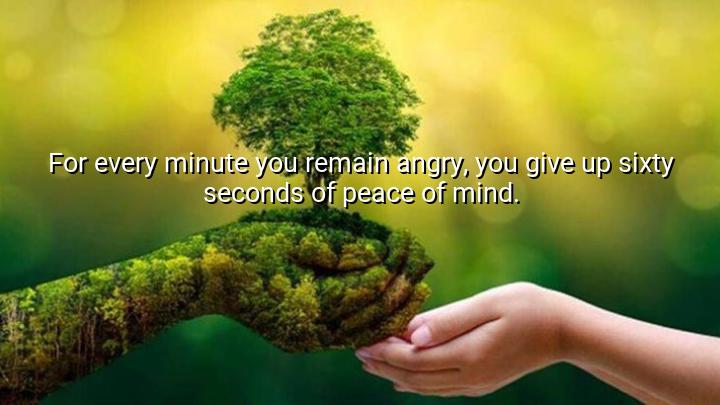




In this quote, Ralph Waldo Emerson highlights the cost of holding on to anger, suggesting that each moment spent in anger is a moment lost in achieving peace of mind. He draws attention to how anger, when allowed to persist, takes away not only emotional energy but also the mental clarity and inner calm that we might otherwise experience. By framing it in terms of time, Emerson emphasizes the opportunity lost in holding on to negative emotions.
Emerson’s comparison suggests that anger is a destructive force, not just in the immediate sense but in the long-term impact it has on one’s overall well-being. The notion of "giving up" highlights how anger can deprive individuals of moments that could be used for more positive or fulfilling thoughts and experiences. Instead of enjoying life or maintaining emotional balance, those moments are consumed by frustration or bitterness.
The phrase “sixty seconds of peace of mind” reinforces the idea that peace and happiness are precious and should not be easily sacrificed for emotions that, in the grand scheme of things, may not be worth the cost. Emerson’s quote encourages mindfulness and the practice of letting go of anger to preserve mental and emotional well-being. It reminds individuals that maintaining peace requires conscious effort and the choice to not allow anger to overpower one's emotional state.
Ultimately, Emerson’s quote serves as a reminder of the value of emotional control and the importance of maintaining inner peace. By recognizing the cost of holding on to anger, individuals can be more mindful of how they choose to handle difficult emotions, ultimately leading to a more peaceful and fulfilling life.

TTrongThanh
Finally, Emerson’s statement makes me think about the cumulative effect of anger on mental health. Holding onto anger for long periods could significantly diminish quality of life. Does this mean that cultivating forgiveness and emotional resilience is essential for sustained happiness? This quote offers a powerful reminder of the benefits of emotional self-care.
CHCanh Hoang
The quote also invites reflection on forgiveness. Is letting go of anger a form of reclaiming peace? How difficult is it to make that choice, especially when anger feels justified? Emerson’s insight seems to suggest that peace of mind is a valuable resource, and managing anger wisely can preserve it.
LNThuy Linh Nguyen
I’m curious about how this perspective applies in conflict resolution. When people remain angry, they not only lose peace but might also hinder problem-solving. Could embracing peace over anger lead to more effective communication and healing? This quote underscores the importance of emotional choices in both personal and interpersonal contexts.
NNNguyen Thi Ngoc Nga
This quote raises interesting questions about time and emotional energy. If every minute of anger costs a minute of peace, how much of our lives do we spend sacrificing tranquility? Are there strategies or practices that can help us reclaim those lost moments? Emerson’s words seem to urge us to prioritize inner calm for better well-being.
TMVu Tra My
Emerson’s quote really highlights the personal cost of holding onto anger. It makes me wonder how often people choose anger over peace, even when it’s within their control to let go. Is anger sometimes so compelling because it feels justified or empowering? Understanding this trade-off between anger and peace might encourage more mindful emotional management.